Islamic History
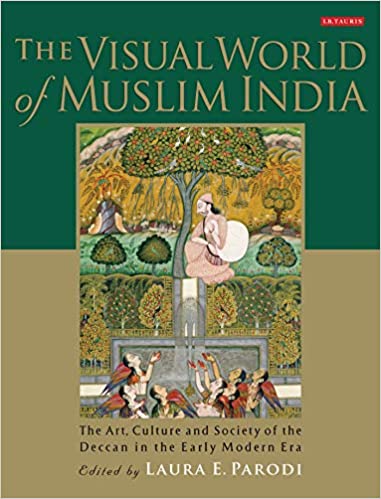
The Visual World of Muslim India
The Art, Culture and Society of the Deccan in the Early Modern Era
Author(s): Laura E. Parodi
Reviewed by: Cleo Cantone
Review
In the context of the growing field of literature on the pre-modern Deccan, Parodi’s edited volume is a welcome contribution. Unlike similar academic works on Islamic visual culture, this publication boasts high quality illustrations whose reasonable dimensions can be wholly appreciated. The editor promotes the collaboration of both young and older scholars “some of [whom] bring fresh perspectives to old themes; others open up altogether new themes” (p. xvii), the result of a conference held at St Anthony’s College, Oxford in 2008. Consisting of four parts, the first examines Deccani cities, the second focuses on art and architecture, the third on court art and the fourth on ‘popular’ devotion and creative production. The first chapter deals with the circular cities of the Deccan. Sardar builds on previous scholarship strengthening the view that the 16th century Deccan cities were linked to pre-Islamic sites and that their circular form would have been understood “in all its valences [sic] given the amount of knowledge of Persianate, Islamicate and Indic traditions in circulation at the time” (p. 26). Resting on the premise that such cities had ‘cosmogrammatic’ significance, Sardar examines historical precedents, the likes of the pre-Islamic cities of Iran and the famed round city of Baghdad under the Abbasids.