Islamic History
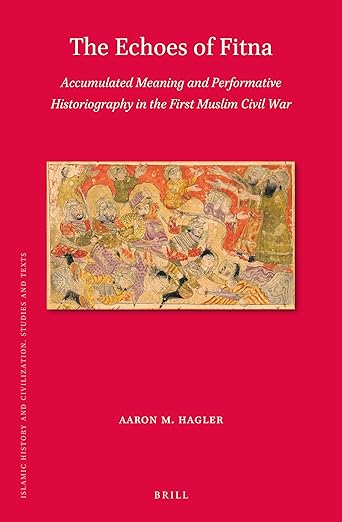
The Echoes of Fitna
Accumulated Meaning and Performative Historiography in the First Muslim Civil War
Author(s): Aaron M. Hagler
Reviewed by: Christopher Anzalone
Review
Reviewed by: Christopher Anzalone – George Mason University, USA
Published by: Leiden: Brill, 2023, 188pp. ISBN: 978-9004524231.
Historians working on the early Islamic period are faced with a challenge regarding the availability of surviving contemporaneous primary sources because the standard Arabic histories date from the eighth and ninth centuries, more than one or two centuries after the events they purport to recount. Perhaps the greatest of the Arabic-Islamic histories is the multivolume work Tarīkh al-Rusul wa-l- Mulūk (The History of the Prophets and the Kings) by the ʿAbbāsid era historian and polymath al-Ṭabarī (d. 923 CE), whose work became a standard reference for later Muslim historians. The Echoes of Fitna examines how two prominent later Sunnī historians, Ibn al-Athīr (d. 1233) and Ibn Kathīr (d. 1373), used al-Ṭabarī’s history while diverging from the latter’s narrative in important ways to fit their own, differing interpretations and narrative goals, particularly regarding the narration of the “fitnah” events that led up to the Battle of Karbala in 680, which are described in overview in Chapter 1. These events include the debates over ʿAlī ibn Abī Ṭālib’s rightful position following the death of the Prophet Muḥammad in 632 and the Battles of the Camel (656) and Ṣiff īn (657). Hagler then proceeds chronologically in reverse with analysis on the Battle of Karbala, the Battle of Ṣiff īn and the breaking away of the Kharijites, and the election of ʿUthmān as the third Rightly-guided caliph in 644. Each of these events is analysed as to their narrative importance and how they are recounted in the written histories of al-Ṭabarī, Ibn al-Athīr, and Ibn Kathīr in Chapters 2-9. Hagler presents the multiple ways in which the elements of the fitnah narrative were and are interpreted along sectarian lines and details how Muslim historians have engaged the narrative and these different interpretations.