Islamic History
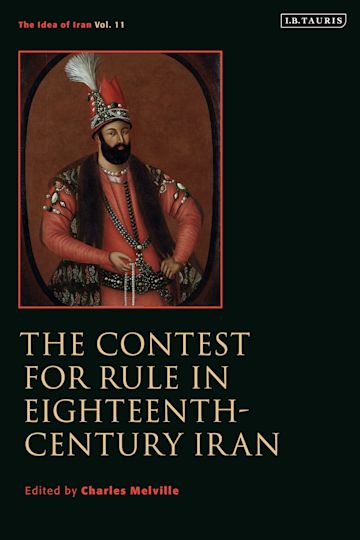
The Contest for Rule In Eighteenth-Century Iran
The Idea of Iran Vol. 11.
Author(s): Charles Melville
Reviewed by: Sajjad Rizvi
Review
Reviewed by: Sajjad Rizvi, University of Exeter, UK
Published by: I.B. Tauris, Bloomsbury Publishing, London 2022, xvi+237pp. ISBN: 9780755645961.
The latest – eleventh – instalment in the Idea of Iran series focuses on the eighteenth century. The premise of the series is to study the diachronic nature of the category and the concept and no doubt as the periods develop the particularities shift. The long eighteenth century is the period between the fall of the Safavids to the Afghans and the rise of the Qajars who consolidated again a broader sense of Iran, and defended its new borders along the lines of what is today the ‘nation-state’ of Iran. At the same time, the porousness of the concept within the wider Persianate world remained. In literary terms across the Persian speaking world, there was a rise in polemics on what constituted authentic Persian and whether it was tied to Iran – and consequently how to make sense of Persian in South and Central Asia. From the rise of Nader Shah and his transnational empire to the ascent of the Durranis and the new kingdom of Afghanistan and the general decline of the Mughals – despite the central role of Northern India in Persianate culture and literature – as well as the shifting political fortunes of different rules across the Iranian plateau, the question of where the centre of Iran has remained open.
The volume comprises nine chapters across this period and should fruitfully be read alongside other works on Iran and the Persianate milieu in this period such as the volumes edited by the late Michael Axworthy, Nile Green, Abbas Amanat, Reza Pourjavady, as well as monographs by Mana Kia, Manan Ahmed, and Kevin Gledhill among others. Melville in his introduction explicitly cites the work of Axworthy as a critical step on the period after many years of neglect (barring the work of John Perry in the 1970s and Ernest Tucker in the 1990s). An important theme of this volume is the shifting borders of Iran and the relationship with Central Asia – although there is little explicit engagement with the idea of the Persianate. Certainly, the eighteenth and nineteenth centuries are becoming the critical periods for an analysis of the relationship between Persia, Persian, and the Persianate as Kevin Schwartz and Alexander Jabbari’s recent monographs have also indicated – not least in the broader sense of how the global south and ‘Asia’ made and saw each other as argued in a wonderful new monograph by Nile Green, turning away from the imperial gaze and shifting to the reversal from the colonised to other conceptions of the margins and imperium.