Islamic History
Stealing from the Saracens
How Islamic Architecture Shaped Europe
Author(s): Diana Darke
Reviewed by: Harftyah Haleem,, London
Review
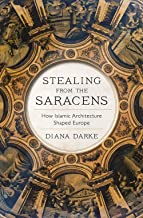
This is a scholarly book with 148 illustrations, many in colour, of historical buildings in Europe and the Middle East and an impressive bibliography (pp. 443–451). Its main protagonist is Sir Christopher Wren, architect of St Paul’s Cathedral after the old ‘Gothic’ one burned down in the Great Fire of London in 1666. Wren’s thinking is quoted throughout the book to support the main thesis that Islamic architecture is at the root of many European buildings. Indeed, Darke goes back further than the Islamic civilisation in some chapters to include pre-Islamic architecture as far back as ancient Egypt (p. 221ff). The dust-jacket shows a picture of the inside of St Paul’s Cathedral dome, with paintings in the neo-classical style disguising the Islamically-inspired, double- domed structure that makes the Cathedral such an unmistakable landmark in London, and makes the dome strong, sturdy and long lasting, with superb acoustics. The terms usually used to describe architectural styles are found to be inappropriate, with ‘Gothic’ being based on the pointed arches and fan-vaulted roofs of many Islamic buildings. Similarly, ‘Norman’ styles from France originated from much further east, from Syria and beyond. The book starts with the present time and then traces historical styles, predominantly in chronological order, from pre-Islamic pagan and Christian to Umayyad in Syria and Andalusia, Abbasid, Fatimid, Gateways to Europe (especially Venice), Seljuks, Ottomans and Sinan (as compared with Wren).
‘Saracenic,’ the word used by Wren to describe the dome architecture he admired so much, is based on the medieval word ‘Saracen’ used to describe Muslims of Turkish origin or, as Wren says, ‘what is the same thing, the Arabians and the Moors’ (p. 3), and is thought to be based on the Arabic word saraqa meaning ‘stealing’. The title makes the point that the Europeans ‘stole’ much knowledge of architecture, geometry (and many other subjects) from the Muslims they met on their travels as crusaders, pilgrims, abbots, monks, merchants, craftsmen (p. 385), even bringing home Muslim master-masons/ architects, and importing materials like plant ash from Syria, to make stained glass windows (pp. 84, 221–4, 374), to help with the building of churches, monasteries, basilicas and other large buildings in Europe.