BOOK REVIEWS
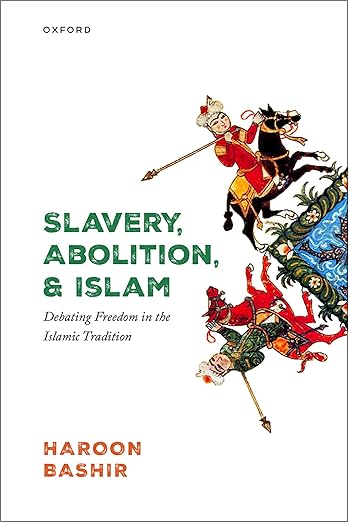
Slavery, Abolition and Islam
Debating Freedom in the Islamic Tradition
Author(s): Haroon Bashir
Reviewed by: Abdullah Ishtiak
Review
Haroon Bashir’s Slavery, Abolition and Islam is a landmark intervention in the fields of Islamic studies, ethics, and intellectual history. The work exemplifies scholarly rigor while remaining accessible to a broader readership of students, educators, and intellectuals . It represents one of the most thorough and theologically sophisticated treatments of the question of slavery in the Islamic tradition to date . The book addresses a scholarly gap . The persistence and eventual abolition of slavery within Muslim societies has long remained an uncomfortable subject . Discussions have often oscillated between apologetic assertions—that Islam was always opposed to slavery—and polemical critiques that portray the tradition as irredeemably complicit . Bashir’s study decisively breaks with both approaches. Instead, he offers a historically grounded and textually nuanced account of how Muslim scholars and jurists engaged with the institution of slavery across centuries, and how the emergence of abolitionist positions developed from within the Islamic intellectual tradition itself . In doing so, the book fills a conspicuous lacuna in scholarship. Bashir opens by posing two fundamental questions inspired by Muḥammad ʿAbduh: Why did a faith that ‘eagerly anticipates the liberation of slaves’ endorse slavery for centuries? And how did Muslim societies eventually come to reject it? He frames these as entry points for exploring whether the Qurʾān inherently supports abolition and how Islamic thought reconciled historical practice with evolving ethics.