BOOK REVIEWS
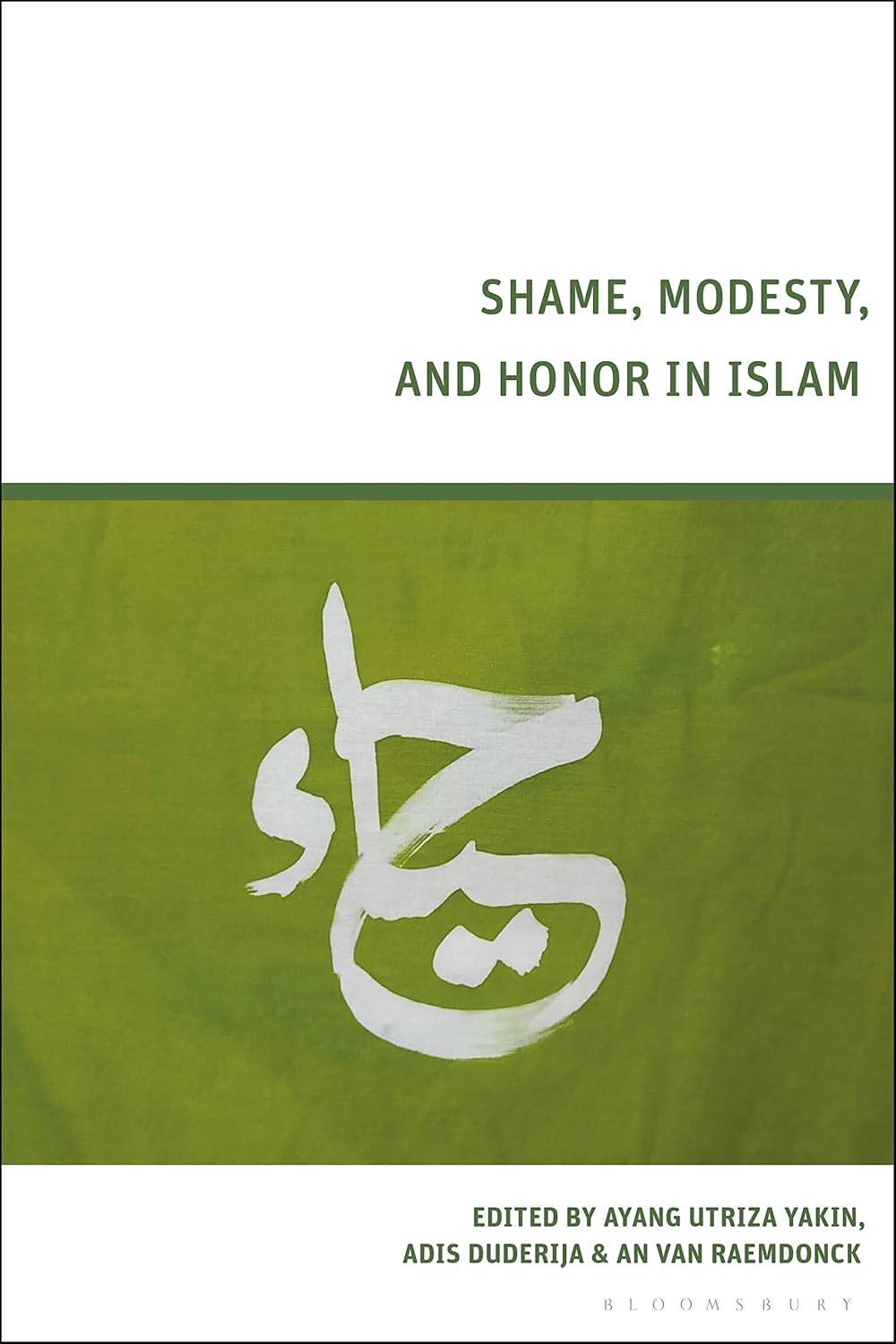
Shame, Modesty, and Honor in Islam
Author(s): Adis Duderija & Ayang Utriza Yakin & An Van Raemdonck
Reviewed by: Abdullah Drury
Review
SHAME, MODESTY, AND HONOR IN ISLAM, edited by Ayang Utriza Yakin, Adis Duderija and An Van Raemdonck. New York: Bloomsbury Academic, 2024, xiv+252pp. ISBN: 978-1350386105.
Reviewed by: Abdullah Drury, Wellington University of Victoria, New Zealand
This book stands as an authoritative account of the Islamic concept of ḥayāʾ (shame) and the manner in which it affects modesty and honour in Islam and the shifting dynamics of modern Muslim societies. Drawing on a plethora of scholars from across the globe, editors Ayang Utriza Yakin, Adis Duderija and An Van Raemdonck offer a succinct recount of both the history and mundane reality of this proposition at a time of unprecedented global turbulence. This is a “must-read” if one is looking to comprehend today’s Middle East and the wider Muslim world.
The volume is organised into three parts and comprises fifteen chapters written by 16 scholars from multiple countries and institutions, including an excellent introductory essay by the three editors. Part I contains three chapters that examine foundational understandings of ḥayāʾ from Sunni and Shiʿi perspectives, highlighting points of convergence and divergence within the broader Islamic intellectual heritage. This section is devoted to general definitions and theoretical paradigms. Part II investigates the interplay of shame, modesty, and honour in Muslim-majority settings, with case studies from Jordan, Niger, Indonesia, Malaysia, Turkey, and Zanzibar (Tanzania). This includes discussions of Islamic notions of shame through the lens of contemporary anthropological and empirical research. Part III turns to minority contexts, analysing how similar themes are negotiated by Muslim communities in Italy, Great Britain, Singapore, China, and New Zealand. This section explores a nexus of Muslim communal experiences that illustrate the complexities and ambiguities involved.