BOOK REVIEWS
Science and Civilisation between Islam and Christianity
Author(s): Muḥammad ʿAbduh
Reviewed by: Kamran Karimullah
Review
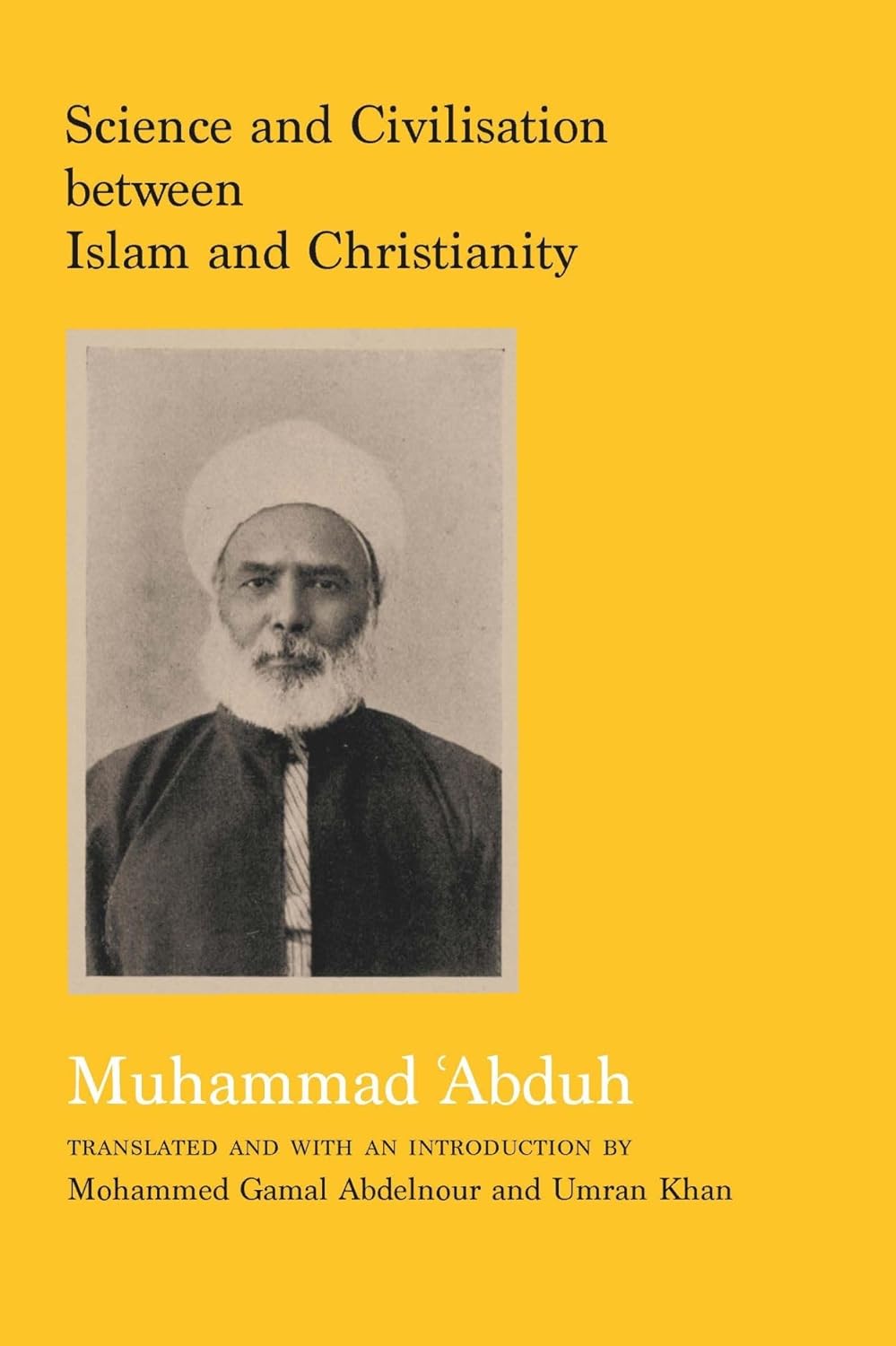
Science and Civilisation between Islam and Christianity, by Muḥammad ʿAbduh (translated with an Introduction by Mohammed Gamal Abdelnour and Umran Khan). London: Ginko, 2025, 320pp. ISBN: 978-1914983252.
Reviewed by: Kamran Karimullah, Manchester University, UK
The work under review, Science and Civilisation between Islam and Christianity (hereafter: SCIC) is a solid English translation by Mohammed Gamal Abdelnour and Umran Khan of a series of articles by Muḥammad ʿAbduh (d. 1905) about science, Islam and Christianity published in two Arabic periodicals between 1900 and 1902. The first series of texts (SCIC, pp.1-40) is a record of ʿAbduh’s debate with Gabriel Hanotaux (d. 1944), a former French foreign minister and editor of Le Journal. The correspondence unfolded in the pages of the Arabic periodical al-Muʾayyad, edited by the Egyptian Nationalist ʿAlī Yūsuf, and the French Le Journal (Gerges, Making the Arab World, p. 47). The second and longer series of texts (SCIC, pp.41-151) represents ʿAbduh’s response to an article about Ibn Rushd (d. 1198) published in al-Jāmiʿah al-ʿUthmāniyyah, an Arabic periodical edited by the notable Christian Lebanese journalist and writer Faraḥ Anṭūn (d. 1922). In the article, Anṭūn charged Islam with failing to exhibit tolerance (tasāmuḥ) for science and philosophy and permitting, or even encouraging, the persecution (iḍṭihād) of thinkers such as Ibn Rushd. ʿAbduh’s forceful response to Anṭūn was originally published serially in al-Manār by ʿAbduh’s pupil Muḥammad Rashīd Riḍā (d. 1935), and subsequently as a monograph with the Arabic title Al-Islām wa’l-Naṣrāniyyah maʿa al-ʿIlm wa’l-Madanīya. Although SCIC derives its title from the monograph, the original, published by al-Manār press, did not, as SCIC does, include ʿAbduh’s debate with Hanotaux. While the translators do not explain this editorial decision, it is one that is, nonetheless, easy to justify. ʿAbduh’s exchanges with Hanotaux and Anṭūn are closely linked thematically. Moreover, the texts appear one after the other in Muḥammad ʿImārah’s five-volume edition of ʿAbduh’s writings which Abdelnour and Khan used as the basis for the translation (ʿImāra, al-Aʿmāl al-Kāmilah, 5 vols.; Hanotaux debate, vol. 3, pp.217-256; Anṭūn debate, vol. 3, pp.256-368). In addition to the translation, SCIC also includes the translators’ introduction, a brief forward by Professor Muhammed Abdel Haleem (SOAS, University of London) and a preface by David Thomas, emeritus professor of inter-religious relations, University of Birmingham. This book promises to attract the attention of a wide audience, academics, students and policymakers. The Arabic texts have long been a mainstay of academic publications on ʿAbduh’s life, thought and influence (Adams, Islam and Modernism in Egypt; Elshakry, Reading Darwin in Arabic, chapter five; Kateman, Muḥammad ʿAbduh and His Interlocutors; Sedgwick, Muhammad Abduh). Owing to both ʿAbduh’s immense historical importance as a religious reformer and intellectual and the enduring relevance of the debate about Islam and science in the contemporary world, we owe the translators our gratitude for facilitating our engagement with Muḥammad ʿAbduh’s thought and legacy.