Islamic History
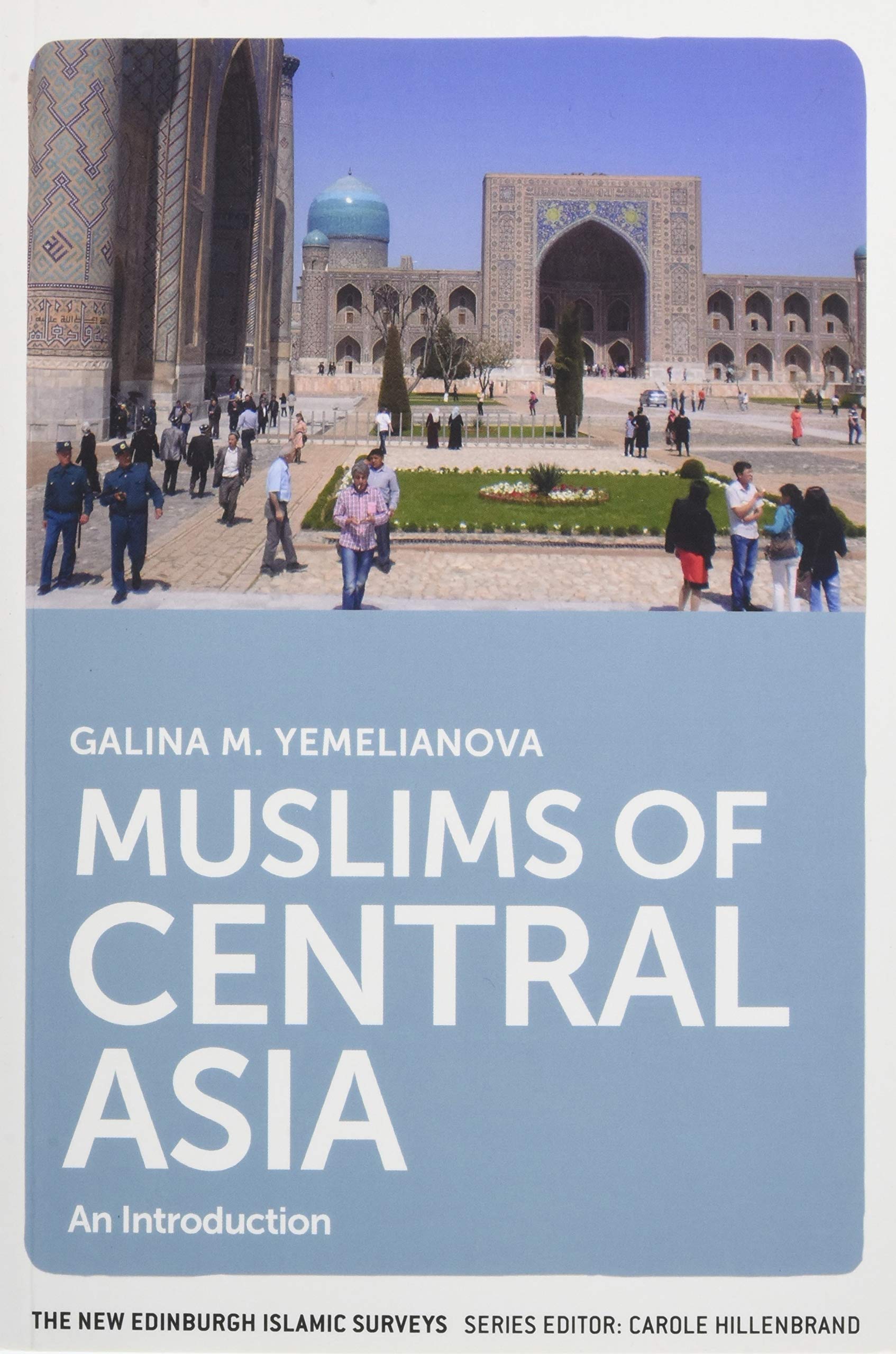
Muslims of Central Asia
An Introduction
Author(s): Galina M. Yemelianova
Reviewed by: Elmira Akhmetova, Kuala Lumpur, Malaysia
Review
Central Asia constitutes a significant part of the contemporary Muslim world, consisting of five Muslim-majority countries, i.e. Uzbekistan, Kazakhstan, Tajikistan, Kyrgyzstan and Turkmenistan, that emerged from the ruins of the Soviet Union in 1991. Central Asia is a geographical concept, covering the ancient region of Transoxiana and the Ma-wara’ al-nahr (Ar. ‘beyond the river’) of Islamic history. Islam first entered the Ferghana valley in the midseventh century and, consequently, the process of Islamization of the entire Central Asian region took place in the following centuries. Major cities such as Samarkand, Bukhara, Kokand and Urgench have flourished as some of the most prestigious centres of Islamic learning and civilisation, giving birth to globally celebrated scientists and philosophers such as Muhammad al-Khwarzimi (d. 850), al-Farabi (872–950), Abu Rayhan al-Biruni (973–1050) and Ibn Sina (980–1037). Throughout the centuries, the Muslims of Central Asia have developed their own unique understanding and practice of Islam which has shaped their national identity and otherness. Such strong national characteristics enabled them to maintain their Islamic identity during the ruthless years of Russian Imperial rule, and seventy years of an atheist regime under the Soviet Union.