Islamic History
Holy War in Judaism
The Fall and Rise of a Controversial Idea
Author(s): Reuven Firestone
Reviewed by: S Parvez Manzoor
Review
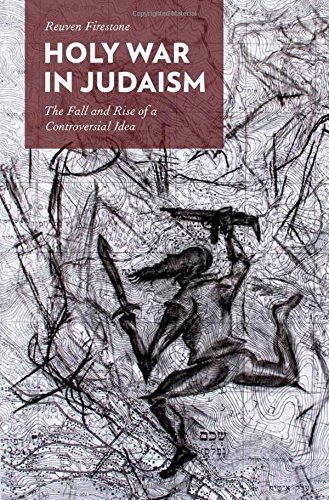
Warfare is as old as human civilization. It is a constant of political existence and intrinsic to statehood. Modern man deems it indispensable for his civilizing mission, just as his strategic thought routinizes it as ‘politics by other means’ (Carl von Clausewitz). As an instrument of statecraft, war is now increasingly justified or denounced on the basis of a rational calculus. The politics of common good, which in modern secular states is sustained by a Machiavellian raison d’état, relies almost exclusively on cost-benefit analyses. (It is left to the artist to reveal the horrors and inhumanity of mass killing which the sanitized public communiqués on ‘missions’ ‘operations’, ‘peace-keeping’ and else deliberately conceal). For modern conscience with its utilitarian take on war as the economy of violence, wars may not always be justifiable but their conduct must indisputably be rational and humane. Not surprisingly, to such a vision nothing appears as revolting and abominable as the spectre of ‘holy war’. Indeed, the very idea of the holy as inviolable is an anathema to secular reason. (The paramount concept of political theory and practice today is ‘sovereignty’; the supreme modern authority is a temporal body-politic, the ultimate site and agency of coercion, which is answerable to no one and which is legally, if not morally, autonomous). For religious conscience, however, war as existential strife and spiritual struggle becomes ineluctable when the inviolability of the inviolable is violated. Lamentably, public debates of our times provide no evidence of any mutually enriching conversation across the Holy-Secular divide, and least of all on the subject of war which further fortifies the current discord. It is therefore courageous of Reuven Firestone, rabbi and professor of medieval Judaism and Islam at the Hebrew Union College, to have produced this lucid and highly accessible volume on a subject that generally receives no other treatment than the polemical or the apologetic. The Muslim reader is especially grateful for this comprehensive survey as it affords him/her an intimate glimpse of a religious and moral tradition that for all the political tensions of today remains congenial and kindred.