BOOK REVIEWS
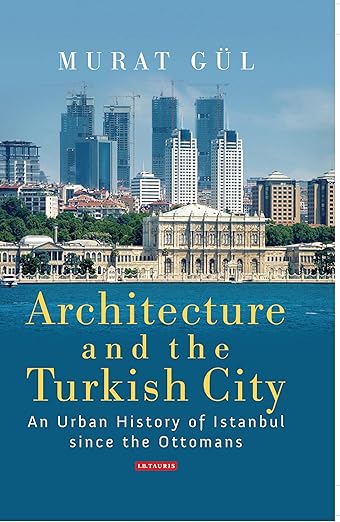
Architecture and the Turkish City
An Urban History of Istanbul Since the Ottomans
Author(s): Murat Gül
Reviewed by: Zeeshan Mahmood
Review
Istanbul, the former imperial capital of the Byzantine and Ottoman empires, retains its famous reputation as being one of the greatest cities on earth . A bridge between East and West, it remains the economic and cultural powerhouse in the modern successor state to the Ottoman Sultanate-Caliphate – Türkiye . In Architecture and the Turkish City: An Urban History of Istanbul Since the Ottomans, Murat Gül, Professor of Architecture at Istanbul Technical University, explores this famous city primarily through an architectural lens whilst also exploring the various interlinked political, social and economic developments that have informed the physical structures dominating the city’s vast landscape.
Over seven main chapters, Gül opts for a linear historical account of Istanbul’s changing landscape developments since the late nineteenth century to the present. He starts with the final decades of the Ottoman era that was driven by the Tanzimat reforms in tandem with severe political, economic and social pressures, noting that this nascent modernisation and becoming integrated into the emergent capitalist international system was hardly different to what other capital cities across the globe were struggling through as well . This was a time when telegraphs, postal services, cinemas, hotels and banks began to spring up in the city for the very first time; these were construction projects that did not always require sultanic patronage or resorting to overt Islamic symbology for legitimation, in contrast to the earlier Ottoman past when the reverse was true . Architectural styles thus reflected an eclectic, dynamic and sometimes bizarre mixture of Ottoman revivalism, neoclassicism and beaux-arts.