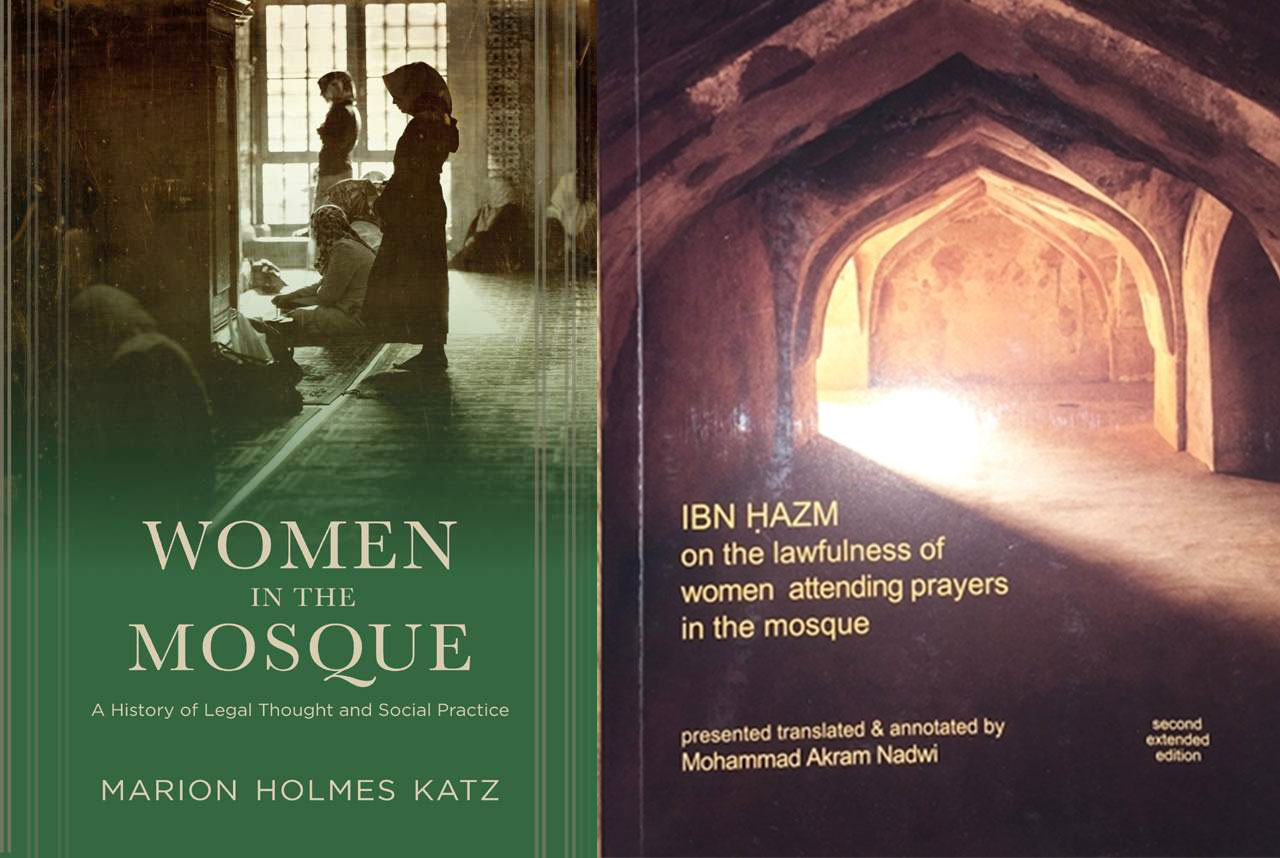
Women and Gender Issues
Women in the Mosque and IBN HAZM
History of Legal Thought and Social Practice and On The Lawfulness Of Women Attending Prayers In The Mosque
Author(s): Marion Holmes Katz & Mohammad Akram Nadwi
Reviewed by: Usaama al-Azami, Leicester, UK
Review
Marion Katz has written an important work that covers the length of Islamic history, and the breadth of the Sunni legal schools, to give us a unique insight into legal doctrines and historical practice pertaining to women’s attendance of the mosque. Her work is divided into an introduction followed by four chapters of uneven length, but excellent quality. The first chapter, “Women’s Mosque Attendance as a Legal Problem” provides a sweep of the four Sunni schools, and briefly, the Zahiris, on the conditions for women’s attending prayers in the mosque. Opening, somewhat unusually, with the Maliki school, the scene is set by the conflicting narrations that are reported from the Prophet (peace be upon him) and his Companions. A report from the Prophet (peace be upon him) expressly prohibits preventing women from going to the mosque, while a later report after his death, from his wife [A’ishah, states that the Prophet would have prevented women from attending the mosque if he were able to see what they were doing in her day. (pp. 17–18) The centuries of debates that follow can be seen to revolve around these two axes, with the tendency, in legal thought, to restrict women’s mosque attendance enjoying greater prominence until the modern reformists’ efforts, which Katz addresses in her final chapter