Islam and the West
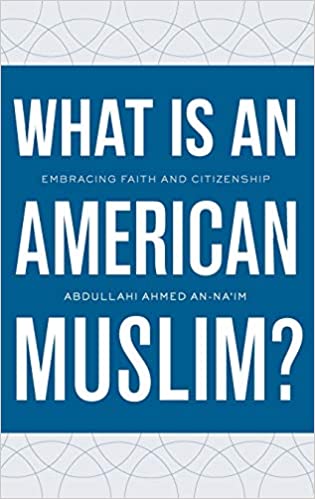
What Is an American Muslim?
Embracing Faith and Citizenship
Author(s): Abdullahi Ahmed An-Na'im
Reviewed by: Hazim Fazlic, Islamic Cultural Center of Greater, Chicago, USA
Review
Abdullahi Ahmed An-Na[im is the Charles Howard Candler Professor of Law at Emory Law, associated professor in the Emory College of Arts and Sciences and faculty affiliate at the Emory University Center for Ethics. An internationally recognized scholar of Islam and human rights and a leading Muslim thinker in the States, in his new book, What is an American Muslim?, the author addresses both native-born and immigrant American Muslims to fully and constructively embrace their American citizenship. In his view, Muslims are entitled and enabled to contribute to defining Americanness for themselves. For him “to be a Muslim by conviction and choice, which is the only way one can be a Muslim, is one of the key features of Americanness” (pp. 2–3). This book has two main objectives: proactive citizenship and religious selfdetermination. Throughout his work, the author is “urging American Muslims to take a proactive, affirmative view of citizenship and to seek religious selfdetermination, including the critical self-understanding of their identity and of conditions under which self-determination can be exercised.” By embracing citizenship, people can define the meaning and implications of being a citizen – a status that is, itself, an evolving and dynamic concept. However, to earn the rights of citizenship, Muslims must assume the responsibilities of citizens by seeking to integrate on their own terms as persons and communities, rather than abandoning their religious self-determination through passive assimilation. (pp. 6–7) Recognising that human beings tend to have multiple, overlapping, and intersecting identities – a wide range of affiliations and interactions, his message concerns all “American citizens who self-identify as Muslims, regardless of what any other person, group, organization, or institution thinks of their claim.” (p. 3)