Islamic Thought and Sources
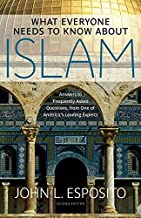
What Everyone Needs to Know about Islam
Author(s): John L. Esposito
Reviewed by: Tauseef Ahmad Parray, Islamic Studies, Higher Education Department, Jammu and Kashmir
Review
Characterized as a ‘turning point’ in the course of international affairs, the events of September 11, 2001 (or 9/11) – whose partial results have been an overabundance of attempts through books, articles, and newspaper editorials to conceptualize the apparent ‘divide’ between ‘Islam’ and Western culture and society – Islam has been, on the one hand, frequently used as a ‘violent’ and ‘terrorist’ religion and, on the other, there has been an overwhelming demand for information about Islam. Recent events after 9/11–the war in Iraq, terrorist attacks, debates throughout Europe over Islamic dress, and many others issues– have raised new questions in the minds of policymakers and the general public.
Although many introductory works on Islam and Muslims, their faith and beliefs are in circulation, there are few comprehensive and concise works on Islam that provide clear-cut and precise answers to nearly all the questions related to Islam, its beliefs, practices, history, politics, and contemporary challenges. It is in this direction that in this new edition of What Everyone Needs to Know about Islam, John L. Esposito provides, in question-and-answer format (Q&A), succinct, accessible, sensitive and concise but also insightful and even-handed answers to questions that are of diverse range: from the general, basic and fundamental questions like ‘What do Muslims believe?’, ‘What is the Muslim scripture?’, etc., to more specific issues like Islam’s relation/compatibility with and response to modernization, democracy, pluralism, capitalism, gender- equality, homosexuality, birth control, abortion, slavery, women rights; and from Islam and Jihad, global jihad, suicide bombing, hijacking, terrorism/ violence, role of internet in Islam, and Islam on environment to Muslim hip- hop, clash of civilizations, Islamism, and Islamophobia. Speaking to a wide range of audiences, from government agencies to the media, Esposito has identified the most pressing, burning, and critical questions people constantly and consistently pose about Islam.