Sufism and Kalam
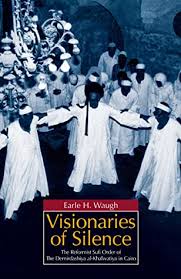
Visionaries of Silence
The Reformist Sufi Order of the Demirdashiya al-Khalwatiya in Cairo
Author(s): Earle H. Waugh
Reviewed by: Abdal Karim Kocsenda, UAE
Review
Earle Waugh has produced an intriguing study of the Cairene Damirdashiyyah Sufi Order under the rubric of the reform or tajdid, examining the contributions of this order both to Islam and their social context. The Damirdashiyyah, a branch of the Khalwatiyyah order, is named after Shams al-Din Muhammad al- Damirdash, who was a student of the great Khalwati master [Umar al-Rawshani/ Ruwayshin (d. AH 893/1487 CE) in Tabriz, Persia. The Khalwati order was known for institutionalizing the Sufi practice of khalwah, or meditative retreat, and is named after Muhammad ibn Nur al-Khalwati (d. ca. 751 AH/ 1350 CE).
Mahmud al-Sirghani, the chronicler of the Khalwati presence in Egypt, notes that at the age of sixteen Shams al-Din Muhammad accompanied Sultan Qaitbay (ca. AD 1416/18 - 1496) to Egypt as a Mamluk and received the nickname ‘Damirdash’ from him. Muhammad was visiting the Tomb of the Holy Prophet (God bless him and grant him peace) when he encountered the Prophet in a vision and conversed with him. When he came out from the tomb all he could say was “Allah” and “Hu” because he could not move his tongue. When Qaitbay asked him what happened he was unable to reply, so Qaitbay said, “you are Demir-Tash,” “dumbstruck” in Turkish. Damirdash cultivated a field neighbouring his Sufi hospice (zawiyah) in the environs of Cairo. He designated his orchard as an endowment (waqf) in three parts: one part for the requirements of the orchard, one part for his children, and one part for the Sufi mendicants (fuqara’) who lived in his zawiyah. He slept very little at night and rose early to recite the Qur’an. He also prescribed that his disciples recite the Qur’an entirely each day, in relays from one to the other, donating the reward of the recitation to Shaykh Muhyi al-Din ibn al-[Arabi (560-638 AH /1165-1240 CE).