Philosophy, Spirituality and Education
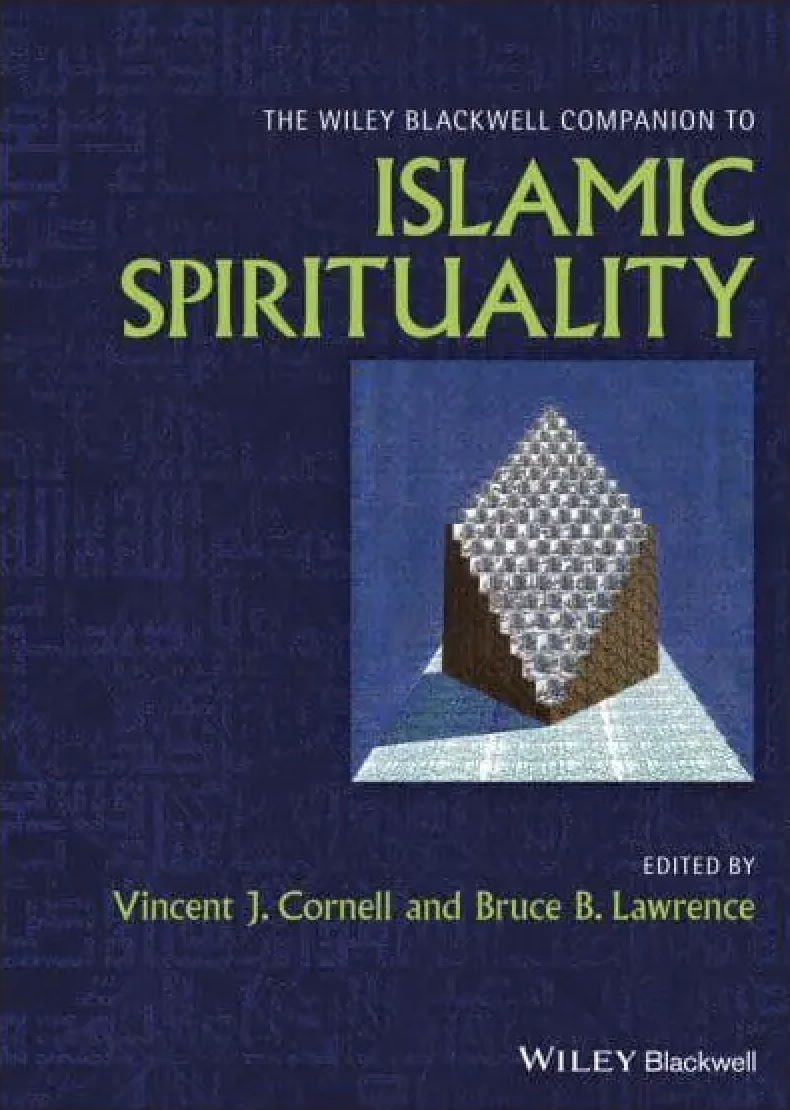
The Wiley-Blackwell Companion to Islamic Spirituality
Author(s): Bruce B. Lawrence & Vincent J. Cornell
Reviewed by: Zakaria El Houbba
Review
Reviewed by: Zakaria El Houbba, Ku Leuven Institute LECTIO, Belgium
Published by: Wiley, New York, 2022, 608pp. ISBN: 9780470674208
Often, the literary genre of academic companions ends up being the mere summation of essays with a – brilliant or not-so-brilliant – foreword, a – thorough or not so thorough – introduction, and the ever-gracious attempt of a hardworking editor-in-chief trying to imbue a consistent style and spirit throughout the chapters. Fortunately, that’s not the case with this companion. The Wiley Blackwell Companion to Islamic Spirituality brings exactly what it promises: companionship. A companion on a long road, with a panoramic view of Islamic spirituality, filled with 28 essays, or signposts so to speak, it aims to express how the meandering river throughout the Islamic tradition and civilizations has always been (the) spiritual. Vincent J. Cornell and Bruce B. Lawrence are to be applauded for completing this gigantic task with expertise and flair. The structure of this well-edited tome is massive, 608 pages in print. It illustrates the joint mastery of putting things into their place, which resonates with the Islamic definitions of both wisdom (hikmah) and justice ([adl). It is not just that this volume comprises 28 insightful essays by a distinguished roster of contributors, who delve into the performative and expressive dimensions of Islamic spirituality. Even more laudable is the way in which they built the structure of the volume: resisting the conventional inclination to reduce Islamic spirituality to the phenomenon of Sufism or certain expressions of spirituality, they let the performative and reflective traditions that make up Islamic spirituality speak for themselves. Cornell and Lawrence succeeded in several introductions to explain the purpose – or intended spirit – of this companion. Particularly, their clarification of striving to use the agonistic rather than the antagonistic relationship between the spiritual and the material – be it in poetry, music, architecture, or movement – allows the essays to offer a refreshing perspective. In order to “think outside the box” and maintain a unified agonistic approach to the various subjects within the book and steer away from the static dichotomy of reason versus spirituality, the editors make explicit their preference for fuzzy logic and the concept of the ‘barzakh.’ This shift from binary logic to barzakh logic is a critique of the conventional scholarly pre-commitments of most reflections on Islamic spirituality, in particular, the artificially staged tension between reason and spirit. Where the bedrock of traditional logic, the rationality of humankind (al-insan hayawan natiq), forms how we understand the cultural and social manifestations of humankind, the editors make a substantial case that through barzakh logic we can actually allow for “the depth of convergence and co-extensiveness that is part of Islamic spirituality” to be taken fully into account.