Islamic Thought and Sources
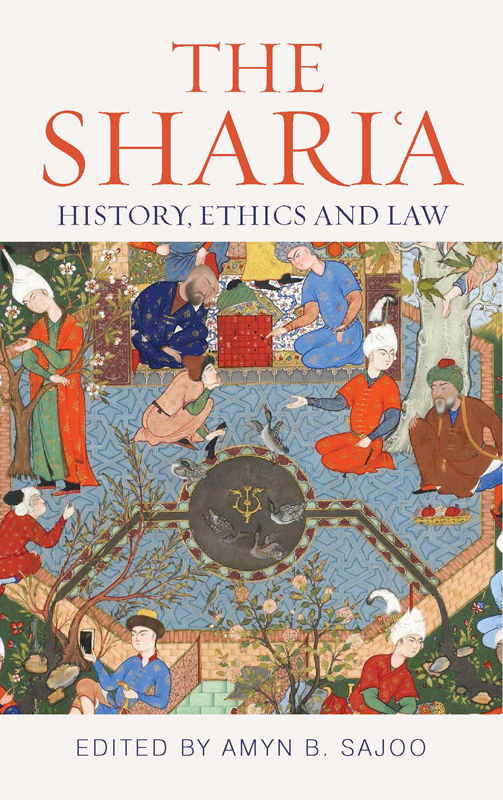
The Shari'a
History, Ethics and Law
Author(s): Amyn B. Sajoo
Reviewed by: Laiqah Osman, Cardiff University, UK
Review
The term shari[ah has been, and continues to be, (mis)understood in different ways, often without consideration for its ethical and moral dimension. In this edited collection, thirteen contributors innovatively ‘re’-address what is meant by the term, challenging the readers and reminding them of its ethical basis and etymology (the literal meaning of shari[ah is the way/path to an oasis). The collection is the fifth volume in the Muslim Heritage Series, covering topics on the civilisations of Islam, produced in collaboration with the Institute of Ismaili Studies. It has twelve chapters written by an assortment of scholars specialising in Religion and Law, Islamic Law, Religious Studies, Islamic Studies and Islamic History. The book is not explicitly divided into discernible sections. However, for this reviewer, the overall argument of the book progressed in an intuitive order. In Chapter One, the editor Amyn B. Sajoo, introduces the book by outlining the three main myths surrounding the Shari[ah: Myth 1: The Shari[ah is a Framework of Divine Law, Myth 2: The Shari[ah is Ritual and Social Regulation, Myth 3: The Shari[ah is Incompatible with Modernity. Each chapter that follows, whilst drawing on Islamic tradition and scholarship, engages with these three myths and contributes to the central theme: the Shari[ah need not be incompatible with Muslims’ interest in democracy.