Islamic Thought and Sources
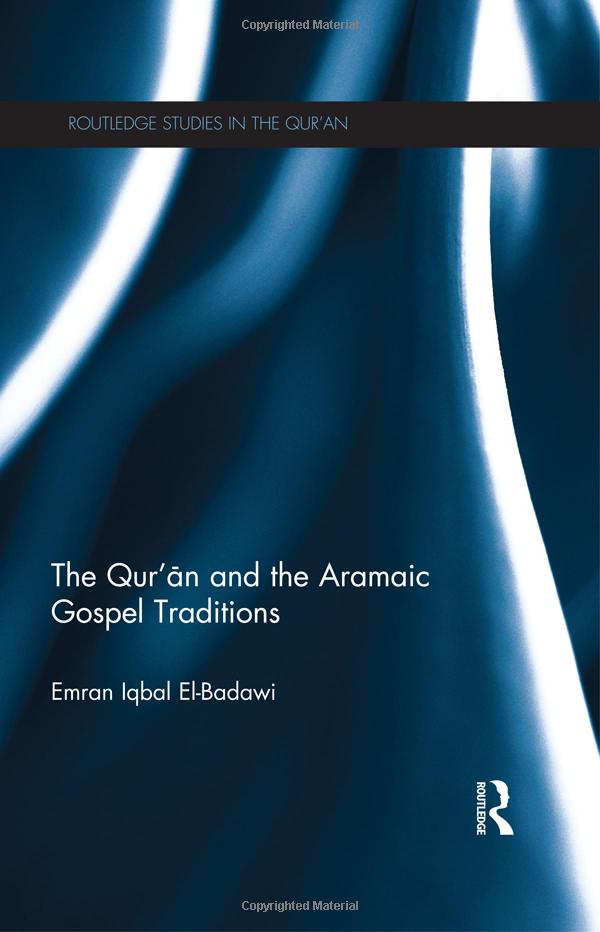
The Qur'an and the Aramaic Gospel Traditions
Author(s): Emran Iqbal El-Badawi
Reviewed by: Abdal Karim Kocsenda, UAE
Review
The mystery of divine revelation has long played on human minds and the greatest thinkers in the history of religions have tried to develop a framework within which to understand the nature and means of the Divine Address. Emran Iqbal El-Badawi, Director and Assistant Professor of Arab Studies at the University of Houston, presents a novel way of understanding the message of the Qur’an: as a dialogue with previous religious dispensations in the Arabian peninsula. To this end, the author engages in a systematic linguistic and thematic study on verses of the Qur’an compared to similar linguistic constructs in the Syrio-Aramaic Biblical and homiletic corpus. While the idea is not entirely novel, Professor Emran’s work does build upon and, to an extent, refute the work of some orientalists who sought to find an “Ur-text” behind the Qur’an – some hidden Christian Aramaic Qur’an that supposedly turned, at some point in history, into the Arabic Qur’an of the Muslims. El-Badawi’s conclusion that the Qur’an is best understood in light of previous scriptural traditions is important, and his methodology of reading texts side-by-side to illustrate their commonalities is robust, but his study is marred by a number of confusions that are so fundamental as to impair the rigour of his thought. It is these that I address in the present review.