Islamic Thought and Sources
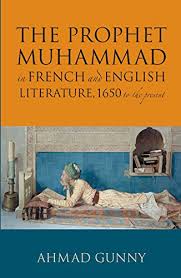
The Prophet Muhammad in French and English Literature, 1650 to the present
Author(s): Ahmad Gunny
Reviewed by: Murad Wilfried Hofmann, Bonn, Germany
Review
Originally from Mauritius and holder of a PhD in French from London University, the author, as a Voltaire specialist, has been working at the Oxford Centre for Islamic Studies for more than a decade. In the book under review he is focusing on the historical misperceptions, and incessant denunciation, of Muhammad in Britain and France, countries chosen for their colonialist exposure to, if not expertise on, Islam. Others, including Edward Said, Norman Daniel, J.M. Buaben, Clinton Bennett, and Minou Reeves have dealt with the same subject. What distinguishes Gunny from them is the encyclopaedic density of his text, demonstrating astounding erudition.
For the years from 1650-1750 writers on Islam without exception, Catholics and Protestants alike, were polemical, dismissive, and even hostile towards Muhammad. This was not only true for clerics like Gabriel de Chinon (Capucine), Ange de Saint-Joseph (Carmelite), Michel Nau (Jesuit), the Abbé Saint-Pièrre, and Edward Pococke (Protestant clergyman). It was universally true as well for laymen like Blaise Pascal, Barthelémy d’Herbelot and Hugo Grotius. Indeed only very few Europeans, like Goethe and George Sale, treating all religions as man-made, were able to see Islam favourably as a form of deism.