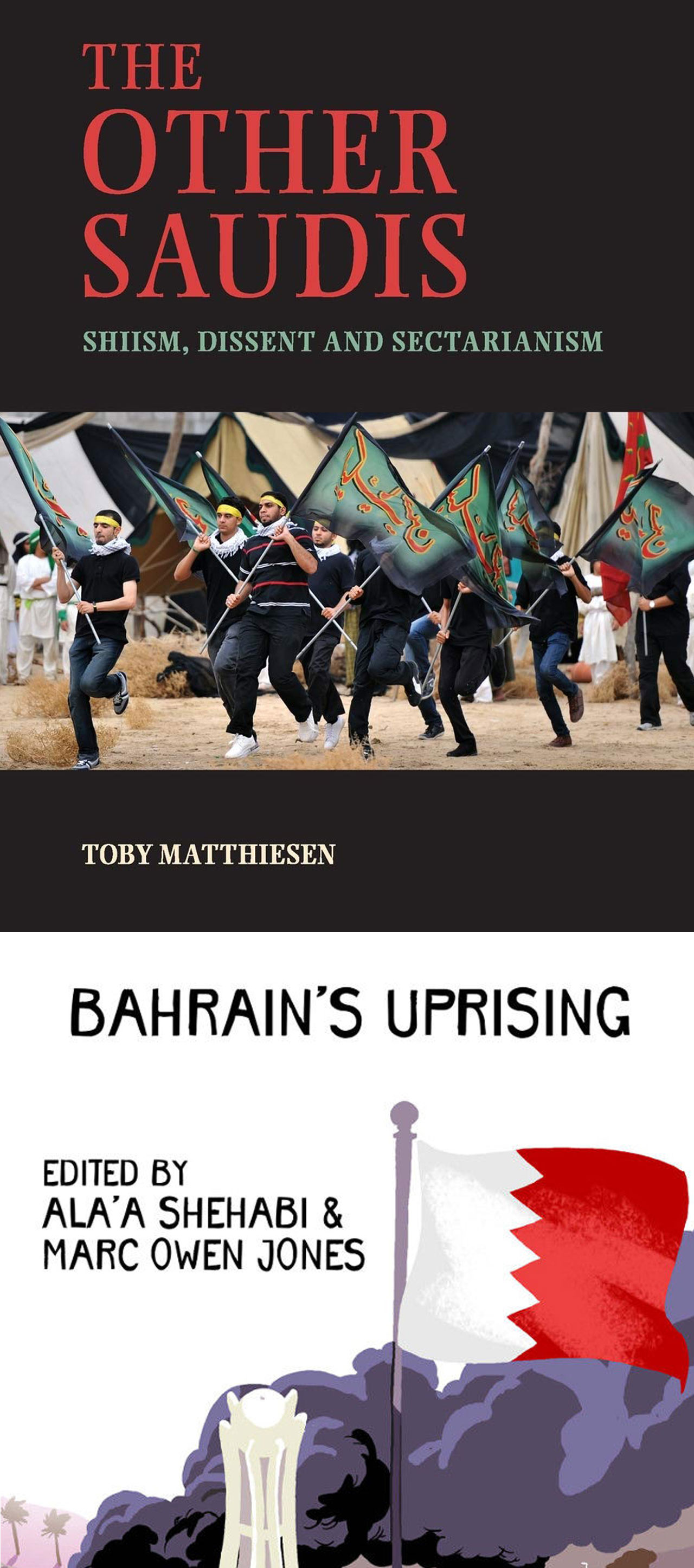
Contemporary Muslim World
The Other Saudis and Bahrain's Uprising
Shiism, Dissent And Sectarianism and Resistance and Repression in the Gulf
Author(s): Toby Matthiesen & Ala’a Shehabi & Marc Owen Jones
Reviewed by: Anthony McRoy, London, UK
Review
The Arab Spring galvanised hope among both the protestors themselves and across the globe, as one of the central tenets of anti-Arab racism – that Arabs are unsuited for, and do not really want democracy – was exploded by the mass uprisings across the region. Sadly, in some cases, longstanding sectarian divisions emerged to splinter the movement, and/or allow repressive regimes to suppress them. Since the Spring, the Sunni-Shi[ah divide has become a major political feature, fuelling the rivalry between Iran and Saudi Arabia. Among the countries directly affected by such sectarianism are Sunnimajority Saudi Arabia, and Shi[ah-majority (but Sunni-ruled) Bahrain. Matthiessen’s excellent volume is an objective historical analysis of the Twelver Shi[ah, largely in the Eastern Province, and to a much lesser extent (which is unfortunate, given the dearth of public references to them in either the media or scholarly works), of the Isma[ilis in Najran. The numbers of the suppressed communities are a matter of dispute: 1.5 million Twelvers, 250,000 Isma[ilis according to the regime, whereas Shi[ah activists give figures of up to three million, perhaps 15% of the Saudi population (p. 6).