Contemporary Muslim World
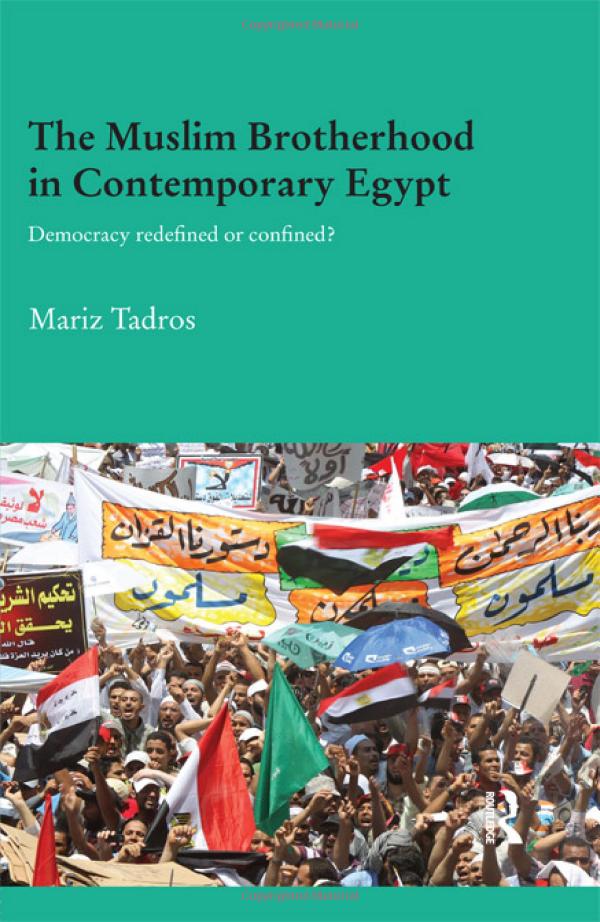
The Muslim Brotherhood in Contemporary Egypt
Democracy Redefined or Confined?
Author(s): Mariz Tadros
Reviewed by: Anthony McRoy, London, UK
Review
The ‘Arab Spring’ is probably the second defining historical event of the twenty-first century – at least, so far – following 9/11 and 7/7. In many ways, it is comparable to the collapse of Communism in Eastern Europe, and is yet unfinished. Attention has particularly centred on Egypt, as the largest Arab nation, which plays a pivotal role in the Middle East, not least as far as US policy is concerned. There was considerable anxiety in Washington over the fall of their client Mubarak, especially as it was fairly clear that in any genuine democratic election, the Muslim Brotherhood (MB) would come to power – as in fact occurred. Most Western commentators and politicians concerned themselves with the geopolitical significance of the MB victory, and only fleetingly with its potential internal consequences for religious minorities and women. Moreover, the MB’s ascendancy has revived an old question: how far is Islam compatible with democracy as understood in the West? It is with these internal questions that the Egyptian writer Tadros concerns herself. The book is lucid and well-researched but an agenda is clearly discernible – albeit one that arises from a critical examination of the sources that inform MB ideology – that the MB’s vision is incompatible with democracy as understood in the West. Part of the problem is terminology: is the MB’s aim an Islamic state, a civil state with an Islamic reference or an Islamic democracy? (p. 1) Why, in using the term ‘an Islamic democracy’, is the qualification necessary? If the new constitutional arrangement is indeed democratic, what does calling it ‘Islamic’ add to our understanding? Essentially, Tadros’ book questions whether a state can be truly democratic in terms of political and religious pluralism and gender equality if such a qualification is added.