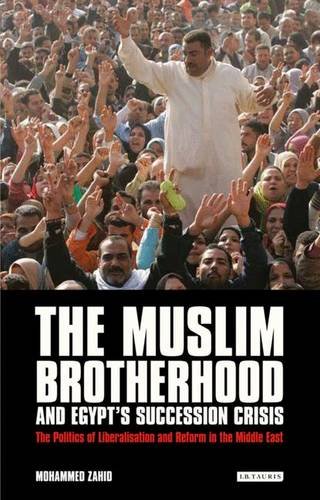
Contemporary Islamic Movements
The Muslim Brotherhood and Egypt’s Succession Crisis
the Politics of Liberalisation and Reform in the Middle East
Author(s): Mohammed Zahid
Reviewed by: Elfatih A. AbdelSalam, International Islamic University, Malaysia
Review
A causal relationship has been hypothesized between economic and political liberalization, with the former viewed as a key driver in the process of political change. Economic liberalization is believed to roll back the state, creating a political space in which civil society can develop. The policy implication of this causal relationship is simple: to encourage economic liberalization and to promote the growth of a vibrant civil society. However, establishing a link between these two variables in the Middle East has been problematic due to two main factors. First, the level and extent of economic liberalization has not been consistent or symmetrical; indeed, in most cases it has been restrictive and minimal. Second, regional crises, such as the Arab-Israeli conflict and the endemic elite conflicts, have been continuously used by those same elites to keep in place autocratic mechanisms and institutions. These two factors have made the examination of the link between economic and political liberalization in the region problematic.