Islam and the West
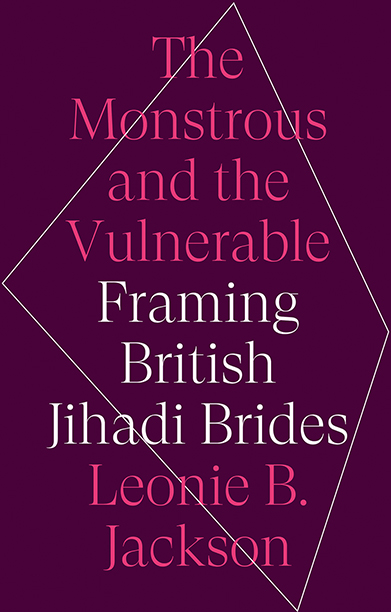
The Monstrous and The Vulnerable:
Framing British Jihadi Brides
Author(s): Leonie B. Jackson
Reviewed by: Linda Hyökki
Review
Publisher: Hurst & Company, London, 2021, 322pp. ISBN: 9781787385450
Leonie B. Jackson’s second book in critical terrorism studies is a comprehensive analysis based on an empirical survey of medial representations of the ten most frequently discussed British women, so-called “jihadi brides,” who immigrated to join the so-called Islamic State (IS). Her sample covers seven newspapers from the left and the right ideological spectrum of British politics. At the centre of her study was the question of how these medial representations and the discourse they were based on reduced the stories of these girls into homogenized identities and, according to her social constructionist approach, affected the way specific policies as an appropriate response to the security problem the girls allegedly posed for the British state, were justified.
The book is divided into an introduction, six main chapters, and a conclusion. Even though the reader might find the chunk of information overwhelming at first glance, Jackson makes sure that there is enough repetition so that the chapters make a cohesive argument. The first main chapter focuses on the theoretical bases of the subsequent analytical chapters, such as feminist intersectionality. It serves as the basis of the idea that the “jihadi bride” narrative under analysis is ultimately part of a more extensive construction of politically violent women, and is heavily gendered, diminishing their agency as political actors. Hence, in these constructions, the idea that women could even be the source of radicalization is unthinkable. In the light of her premise that in contrast to politically violent men, women involved in terrorism are usually not represented as active agents making autonomous political choices, she makes a strong argument how the construction of the IS women in her sample served the long-term purpose of creating acceptable policy responses to the kind of identities these women are ascribed through medial representations.