Islam and the West
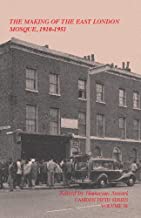
The Making of the East London Mosque, 1910-1951
Minutes of the London Mosque Fund and East London Mosque Trust Ltd
Author(s): Humayun Ansari
Reviewed by: Mohammad Seddon, University of Chester
Review
Humayun Ansari is the UK’s foremost historian of Islam in Britain. His seminal work, ‘The Infidel Within’: the history of Muslims in Britain, 1800 to the present (London: C. Hurst Publishers, 2004), was previously reviewed with great enthusiasm by this reviewer as a research study of major importance in the developing British Muslim narrative. Ansari’s latest monograph, The Making of the East London Mosque, 1910-1951, continues the author’s extensive research into the emerging historical discipline that might be best termed ‘British Muslim Studies’. The new publication both documents and contextualises the founding of the East London Mosque from its earliest conception at the turn of the twentieth century to its eventual and much overdue physical establishment. In 1910 the Aga Khan and Syed Ameer Ali convened a public meeting at the Ritz Hotel, London, in which a strategy for the construction of a mosque in London ‘worthy of the capital of the British Empire’ was agreed. After much procrastination their dream was eventually realised and a mosque was established by 1941 in a converted building on Commercial Road in London’s East End from where it moved to Fieldgate Street and then finally to Whitechapel Road in 1985, where it now stands as a fitting testament to and ‘flagship’ of British Muslims and Islam in Britain. As one might imagine, however, the project was fraught with difficulties from its inception and the many problems it faced are intermittently recorded and captured for posterity in the Minutes of the mosque’s Trust’s meetings.
In this captivating volume, Humayun Ansari, Professor of Islam and Cultural
Diversity, Department of History and Director of Minority Studies at Royal Holloway, University of London, has collated and extensively researched the original Minutes and related documents associated with the establishment and management of the mosque as a unique way of mapping out the history of how this newly emerging and increasingly confident Muslim community of the early-twentieth century brought together some of the major Muslim figures of the British establishment in their efforts to cooperate with each other in the interest of developing and consolidating Britain’s increasing Muslim population and multicultural society. The publication presents a comprehensive reproduction of the Minutes and related correspondence of the London Mosque Fund and East London Mosque Trust Limited from 1910 until 1951. In doing so, this volume provides an invaluable primary source material for those interested in the contemporary history of Islam and Muslims in Britain by making accessible a rich body of archival material that was previously generally unavailable. The obvious question one might ask is why does the collection of Minutes included in the volume end at 1951? Ansari informs us that ‘this date [December 1951] marks the end of the first collection of the Minutes preserved at the mosque, at a time when the ‘old guard’ of Trustees was still largely in charge of the project, despite the fact that by then India and Pakistan had attained independence’ (p. vii). It maybe that this research project could be concluded by the publication of a second volume that covers the period between 1952 to the present, as the volume’s introduction does, thereby providing a complete and extensive collection of the East London Mosque’s official archives.