Contemporary Muslim World
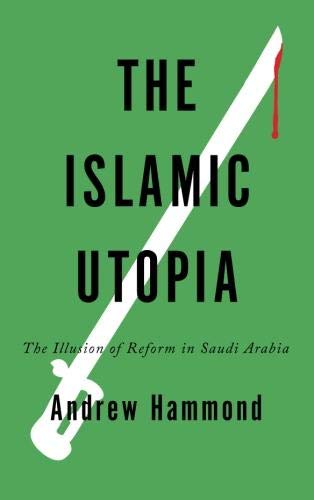
The Islamic Utopia
The Illusion of Reform in Saudi Arabia
Author(s): Andrew Hammond
Reviewed by: Abdal Karim Kocsenda, UAE
Review
One gets mixed feelings reading Hammond’s ill-titled dissection of Saudi life, religion and politics that reads like a journalist’s walk-through of a deeply disturbed nation. The author’s premise is to write a book about Saudi Arabia and the possibility of reform. This of course is a loaded, heavy task. Saudi Arabia is a kingdom that is around 80 years old, formed along tribal and religious lines when the Al Sa[ud tribe, backed by British colonial power and seeking control of a religiously diverse peninsula, allied itself with an enthusiastic preacher, Muhammad ibn [Abd al-Wahhab, who sought to reinstate his own puritanical vision of Islam. To this end and with “the wedding of idea to arm” they occupied the Arabian Peninsula imposing their political and religious rule. Under the belief that they were ridding Islam of the polytheistic practices of venerating saints and holy persons, they ended the Ottoman-backed Sharifid dynasty of the Hejaz (who fled and now rule Jordan), and reused the graves of the Sahabah and Tabi[in in al-Baqi[ and al-Mu[alla. They also reached as far afield as Karbala in Iraq and Ras al-Khaima in the Emirates. Despite the fact that several of the Muslim Ulema at the time repudiated their misunderstandings and affirmed that veneration did not equal worship, the Wahhabi movement was unflinching in the continuation of its teachings.