Review Article
The Intractable Sovereignty
The Impasse of Secular and Islamist Political Theory (Part: 1)
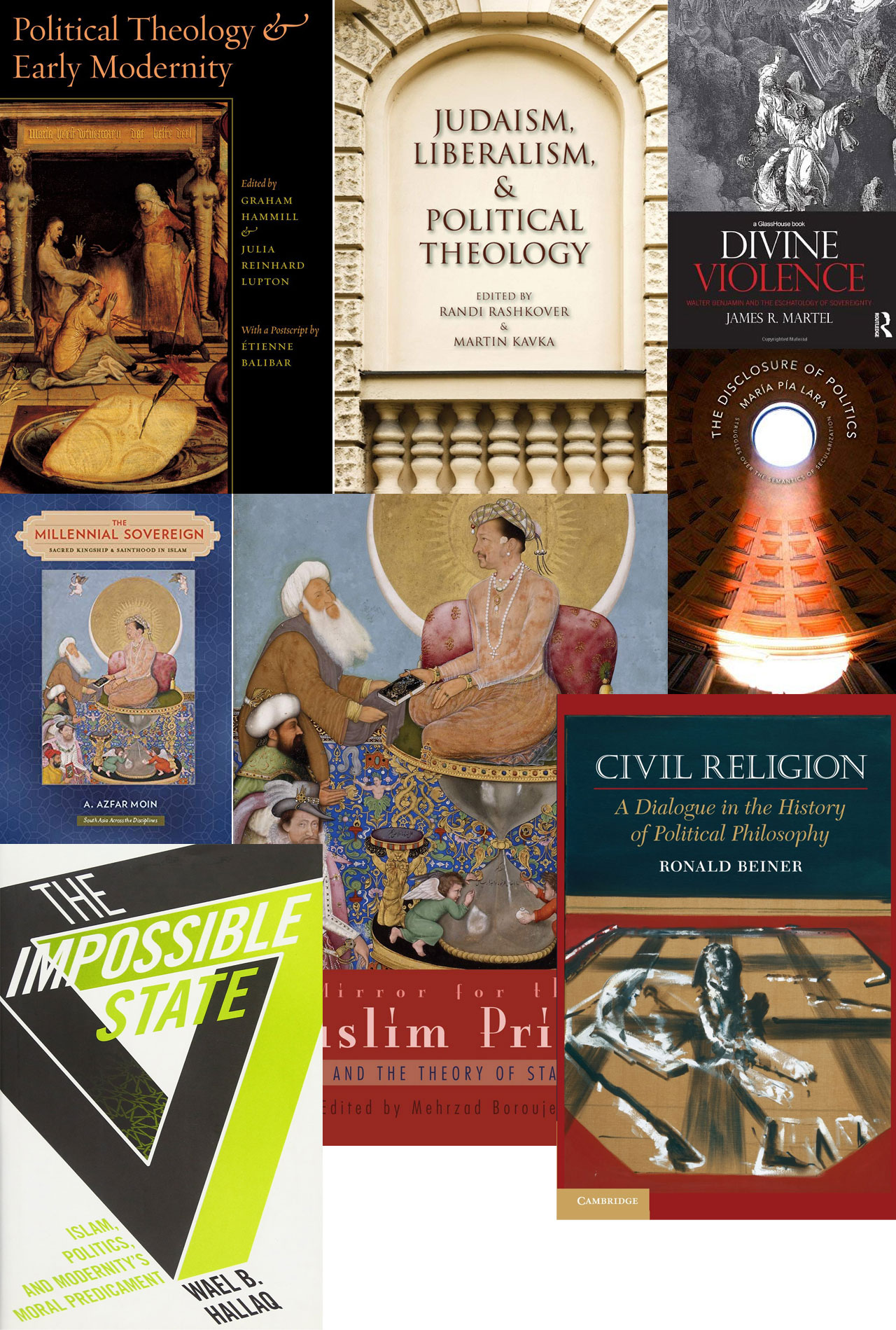
Author(s): Mehrzad Boroujerdi & Wael B. Hallaq & Azfar Moin & María Pía Lara & Ronald Beiner & Panu Minkkinen & James R. Martel & Randi Rashkover & Martin Kavka & Graham Hamill & Julia Reinhard Lupton
Reviewed by: S Parvez Manzoor
Review
In a moment of despair, a western scholar regrets the inability of modern theory to provide a cogent account of what he perceives as the ‘World (dis)order that began with the fall of the Berlin Wall in 1989’, and wonders whether ‘this incapability (is) a sign of the impotence of Western political thought’. If so, he reasons, why not abandon the ideological moorings of this hallowed tradition and renounce its foundational premises altogether; why not seek guidance and enlightenment elsewhere rather than trusting ‘the West to the exclusion of the rest’? Indeed, ‘why reconstruct what should properly be deconstructed, if not destroyed once and for all?’ For this critic, it is beside the point whether political theory has been replaced by political economy, as claimed by some, or whether, as others insist, ‘the critical spirit of modernity must be contained by a conservative respect for the limits of human action’. The question that haunts him is: Is the Western tradition of political thought deservedly dead? Was it built on the domination of others and even of nature itself?1 Whatever the merits of such self-doubt, or of the perplexity that even ‘if a modern theoretical discourse that was not permeated by the hubris of mastery was conceivable’2 , the issues of power and domination would always be paramount in any account of modernity. All appraisals of the West, indigenous or alien, must therefore focus on the moral landmarks of its historical project, the exploitation of (nonWestern) man and the subjugation of (non-human) nature.