Islamic Thought and Sources
The Glorious Quran
Author(s): Shehnaz Shaikh & Kausar Khatri
Reviewed by: Abdur Raheem Kidwai
Review
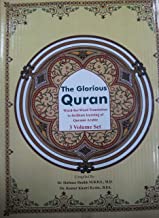
The subtitle of this English translation of the Qur’an clearly indicates its tenor as well as its strengths and limitations: Word-for-Word Translation to facilitate learning of Quranic Arabic. Driven by their religious fervour, these two female scholars have brought out an interlinear, literal translation in which the English equivalent of each Qur’anic word is diligently provided. In their opinion, this will familiarize English speaking readers with Qur’anic Arabic. Notwithstanding their pious intention and laudable efforts in promoting the cause of the Qur’an, their premises are largely naïve and simplistic. It is commonplace that many Qur’anic expressions recur in the text. If one assigns the same meaning to these instances while disregarding their different contexts and circumstantial settings, one will not and cannot do justice to the meanings intended therein. On the other hand, if one employs English equivalents to different usages and nuances of the same word, it will confuse, rather confound, the readers.
More serious is the problem of producing a literal translation. Fidelity to the original is undoubtedly a pre-requisite in its translation. However, a literal translation which is devoid of any background information or explanation of personalities, places and allusions mentioned in the text, does not advance the readers’ understanding. How can one grasp the meaning of Surah al-Fil, without having a clue about the identity of the ‘Companions of the Elephant’? (p. 855). The translators faithfully translate the opening two verses of Surah Quraysh thus: “For the familiarity of the Quraysh. For their familiarity with the journey of winter and summer” (p. 856). Those new to the Qur’an will not likely work out who the Quraysh are and what is meant by their winter and summer journeys.