Short Reviews
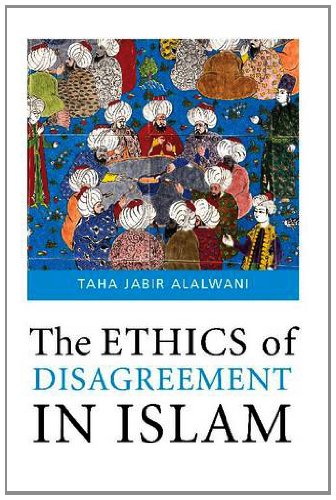
The Ethics of Disagreement in Islam
Author(s): Taha Jabir Al-Alwani
Reviewed by: Abdur Raheem Kidwai
Review
This is a reprint of the original work which had first appeared in 1993 by Dr AlAlwani is an acclaimed Muslim jurist. In the book under review he sagaciously tackles the tricky issue of ikhtilaf (divergence of opinion on religious issues). While some differences of opinion are natural, these sometimes lead to regrettable, devastating consequences. This point comes out from his opening note: The circumstances that led us to write on this subject were that a number of Islamic groups… began to take opposing positions and soon fragmented themselves into numerous Islamic parties, associations, factions and coalitions, each with its own agenda… In their efforts to support their claims to represent “true” Islam, some of these groups went so far as to label other Islamic parties as disbelievers, apostates and heretics.” (p. xi) Against this backdrop, Al-Alwani draws our attention to the historical precedents of such differences and their amicable solutions in the days of the Prophet Muhammad (pbuh) (pp. 20-33) and early Muslims (pp. 34-64). His diagnosis of the problem is quite perceptive, as he illustrates how some implausible, far-fetched interpretations of certain Qur’anic verses give rise to serious differences, and even dissensions within the community. How the import of the following verses has been twisted with a view to giving it a particular slant is demonstrated thus: