Islamic Thought and Sources
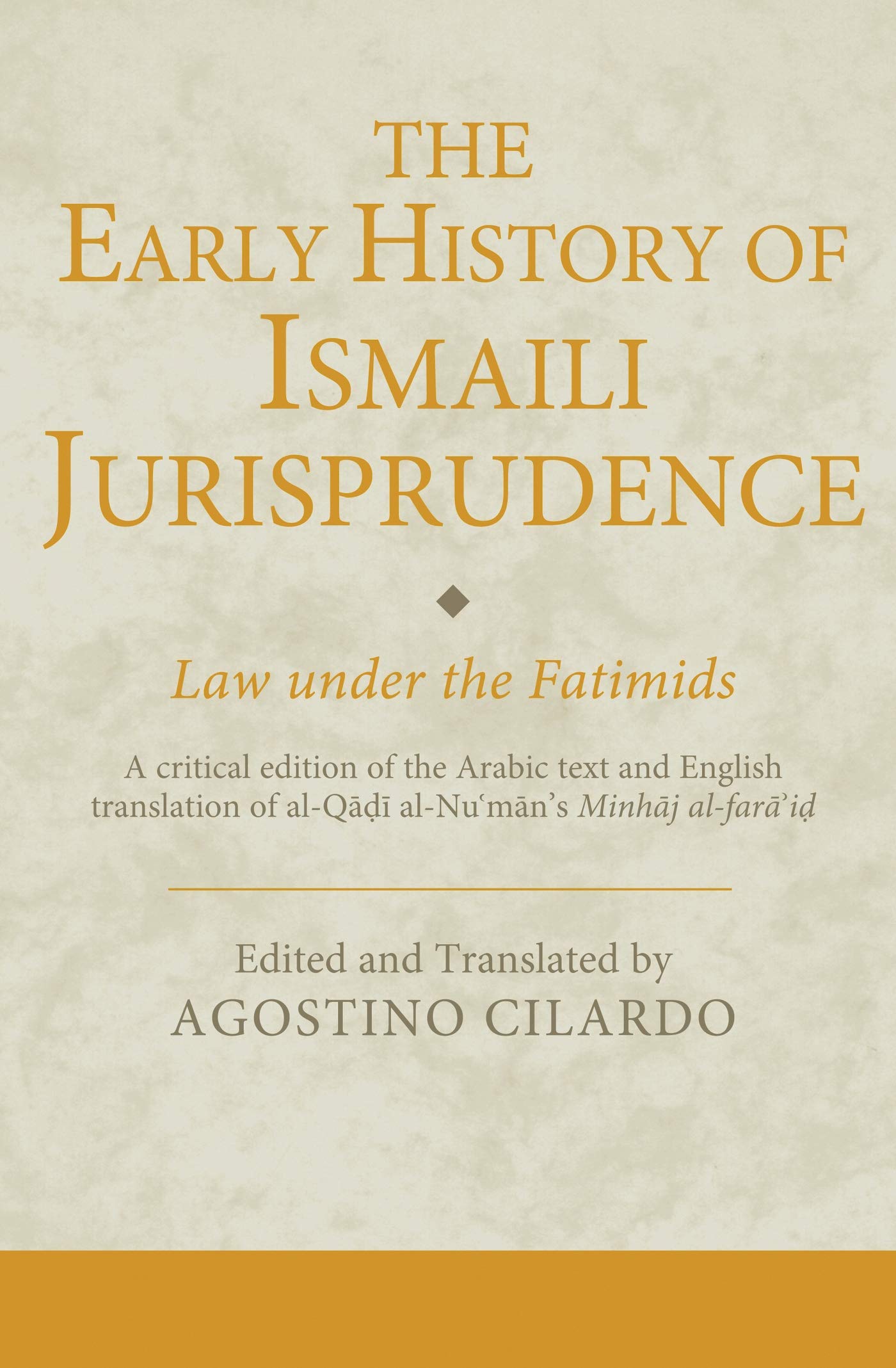
The Early History of Ismaili Jurisprudence
Law Under the Fatimids. A Critical Edition of the Arabic text and English translation of al-Qadi al-Nu[man’s Minhaj alFara’id
Author(s): Agostino Cilardo
Reviewed by: Christopher Anzalone
Review
The volume under review, one of the latest publications from the London-based Institute of Ismaili Studies, makes a significant contribution to a range of fields including the Isma[ili studies, the history of Islamic law and jurisprudence (usul al-fiqh), and Shi[i studies generally. The editor and translator Agostino Cilardo, a professor of Arabic and Islamic studies at the University of Naples “L’Orientale,” has provided a valuable contribution to the comparative study of Islamic law, jurisprudence, and legal interpretation with his translation of a work attributed to the tenth century Fatimid Isma[ili jurist and scholar Abu Hanifah ibn Abi [Abd Allah Muhammad ibn Mansur ibn Hayyun, better known as al-Qadi al-Nu[man (d. 974), who played a major role in the early success of the Fatimid Imam-caliphs and the spread of the Fatimid da[wah in North Africa, Yemen, and the Mashriq. In a succinct, yet detailed introduction, Cilardo engages in the scholarly debate about the legal influences on al-Nu[man as well as whether his jurisprudence represents a uniquely Fatimid Isma[ili system of jurisprudence and legal thought, as opposed to a mere “copy-and-pasting” from other Sunni and Twelver Shi[i jurisprudential schools. Though influenced by non-Isma[ili legal thought, Cilardo finds that Minhaj al-Fara’id, which deals with issues of inheritance, is an Isma[ili legal work. He also believes that it can be attributed to al-Nu[man, considered to be the founder of Fatimid Isma[ili jurisprudence.