Islamic Thought and Sources
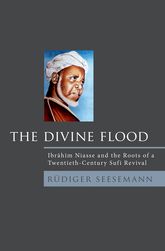
The Divine Flood
Ibrahim Niasse and the Roots of a Twentieth Century Sufi Revival
Author(s): Rudiger Seesemann
Reviewed by: Cleo Cantone
Review
Seesemann’s book is an important contribution not only to the study of religions in general but to Anglophone studies on sub-Saharan West Africa in particular. Methodologically it breaks new ground by taking into account Sufi perspectives, “ultimately (this will) help us to integrate apparently unorthodox ideas... with the intellectual tradition of Sufism” (p. 22). The anecdote about a man who leaves his meat outside the mosque where Niasse was leading the prayer provides a useful frame for understanding both aspects of Ibrahim Niasse’s own mystical journey and the Sufi tradition from which the movement of the divine flood sourced its inspiration. Rather than perpetuating the fairly standard trope according to which Sufism practised in West Africa is backward, popular and unorthodox, Seesemann chooses to re- interpret a model proposed by anthropologist Robert Redfield. Sufi tradition is therefore no longer analysed in terms of its ‘high’ and ‘low’ hierarchical structure but seen as consisting of a ‘great’ and ‘little’ tradition which are often interconnected but by no means constitute absolute categories, hence leaving room for ambiguity rather like, the author explains, Sufis’ own distinction between al-khassah and al-[ammah, the special or initiated ones as opposed to the uninitiated ‘masses’.