Philosophy and Comparative religion
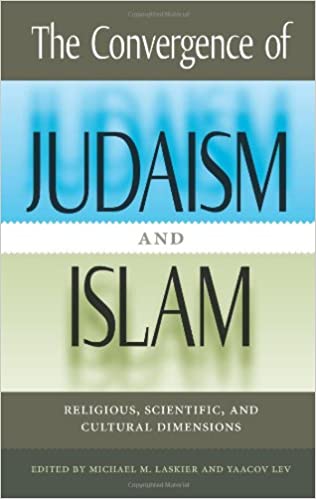
The Convergence of Judaism and Islam
Religious, Scientific, and Cultural Dimensions
Author(s): Michael M. Laskier & Yaacov Lev (Eds.)
Reviewed by: Harftyah Haleem,, London
Review
This book is one of a pair, the other being The Divergence of Judaism and Islam: Interdependence, Modernity and Political Turmoil. This companion volume, as noted in the Introduction (p. 3), covers only the Modern period when:
Changes occurred under European colonialism in much of the Arab and Islamic worlds, and among the non-Muslim minorities in their midst, owing to the gradual integration into the modern world economic system and with the rise of nation states.
This shows how the modern period and Nationalism divided the Muslims and Jews in a way that a millennium of peaceful interaction had failed to do. The book under review is written by Jewish scholars from various universities across the world, and is edited by two professors from Bar Ilan University in Israel. It deals with the complex influences and interactions between Jews and Muslims living in various parts of the Islamic world from the earliest, polemical stories about the Jewish Companions of the Prophet Muhammad to the start of the modern colonial period, and even up to the 20th Century in Chapter 13 on the Mistiaf al-Shbatiot poets with continuing interactions between Jewish and Muslim musicians (Chapter 14). In medieval Islamic Spain this kind of cultural interchange was called the convivencia and gave rise to some of the best Hebrew poetry and philosophical writings, interacting with the Muslim Arab philosophers and poets of the time. It is clear that the relationship between Muslims and Jews was that of mutual respect and even collaborative for the most part until the rise of 20th-century Zionism, the pogroms in Iraq, and the establishment of the State of Israel (see p. 262).