Political Islam
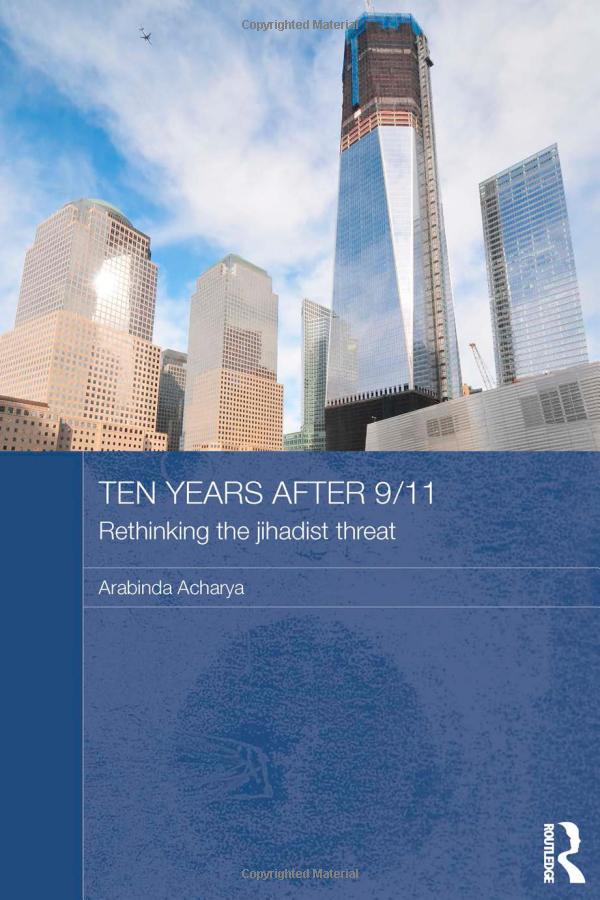
Ten Years After 9/11
Rethinking the Jihadist Threat
Author(s): Arabinda Acharya
Reviewed by: Ruqaiyah Hibell
Review
Post 9/11, a strange lexicon of Arabic words and concepts has transmuted into the English language profanely divorced from their sacred and spiritual locus. The title of this book epitomises this corruption, while the content extrapolates the extent and nature of global jihadist threats to the rest of the world. This grates and irritates from the outset of engaging with the text, rendering the author’s often salient arguments less operative. Relinquishing his role as a dispassionate academic observer, Acharya firmly aligns himself as broadly supportive of current Western politico-military strategy, perceiving it as basically ‘on-track’, notwithstanding, a series of incremental criticisms and/or recommendations for further development of policy initiatives, tagged on to the end of each chapter. The text is replete with famous quotations abstracted from the ‘dubious musings’ of numerous historical bastions of machismo and testosterone, violent militarist proponents, Clausewitz, Sun Tzu, etc., in order to reinforce and explain current American military strategy and responses to existential threat. Just as communism provided the alto-ego to capitalism, it has now been replaced as the number one threat to global security by an unlikely enemy of raggedly, often amateurishly organised, groups of militant fighters, or self-styled individuals, loosely linked to a distorted ideology of disdain (directed both towards non-Muslims and Muslims who fail to support their objectives), who struggle to assume a mantle of legitimacy by subverting hallowed Islamic ideals and practice.