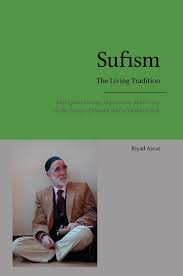
Philosophy, Theology and Sufism
SUFISM – THE LIVING TRADITION
SUFI EPISTEMOLOGY ENCOUNTERS MODERNITY IN THE TARIQA OF SHAYKH ‘ABD AL- QADIR AL-SUFI
Author(s): Riyad Asvat
Reviewed by: Ian G. Williams, Markfield Institute of Higher Education, Birmingham, UK
Review
Within Islam, those believers influenced by Sufism (tasawwuf) affirm that they are practising Itisan [perfection of worship] as explained by Gabriel to the Prophet Muhammad (blessings and peace be upon him) as recorded in a tiadith, ‘… to worship Allah as though you see Him for if you do not see Him, He nevertheless sees you.’ Classical Sufi scholars have defined Sufism as ‘… a science whose objective is the reparation of the heart and turning it away from all else but God’ (Seyyed Hossein Nasr, The Essential Seyyed Hossein Nasr, ed. William C. Chittick (Bloomington: World Wisdom, 2007), p. 74).
The history of the study of Sufism shows how the Orientalist discourse on religion reformulated aspects of Islamic faith and practice into a separate category called “Sufism”. At the same time, growing conservative movements in Muslim majority countries isolated and rejected many aspects of what we call Sufism, as part of a struggle over the ownership of Islamic religious symbolism. The fact that these debates have taken place in the colonial and postcolonial periods indicates that understanding and engaging with modernity is crucial to the understanding of Sufism.