Philosophy, Spirituality and Education
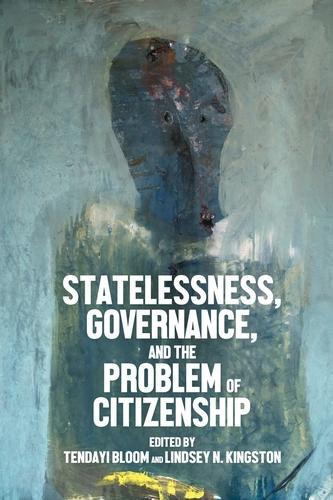
Statelessness, Governance, and the Problem of Citizenship
Author(s): Tendayi Bloom & Lindsey N. Kingston
Reviewed by: Carimo Mohomed
Review
Published by: Manchester University Press, Manchester, 2021, xviii+382 pp. ISBN: 9781526156419.
I have been working on a politico-theosophical treatise on cosmopolitanism for the last few years and the opportunity to review this book has been serendipitous. Before engaging directly with the work, I would like to draw the reader’s attention to two or three main ideas.
For Hannah Arendt (1906–1975), before an individual can enjoy any civil, political or social rights, he or she must first possess the right to be a citizen of a nation-state, or at least a member of some kind of organized political community. According to Carl Schmitt (1888-1985), all significant concepts of the modern theory of the state are secularized theological concepts not only because of their historical development – in which they were transferred from theology to the theory of the state, whereby, for example, the omnipotent God becomes the omnipotent lawgiver – but also because of their systematic structure.
Where once one had God, now one has the State. When the (Catholic) Church, as an institution speaking on behalf of the former, refused to give a person communion and did not allow him or her to be involved in the Church as a community, it excommunicated that person (literally, to be put out of the community). In the Muslim world, one has all those who, for some reason or no reason at all, declare their (supposed) enemies as kafir, in a process known as takfir, or governments declaring parts of the population as non-Muslim, with all the political consequences which that implies. In any case, and if the enemy could/can be declared an infidel, outlaw, or terrorist, the way was/ is clear for unrestrained violence, with divine sanction to wage wars against heretics and other lesser beings.