Islamic Thought and Sources
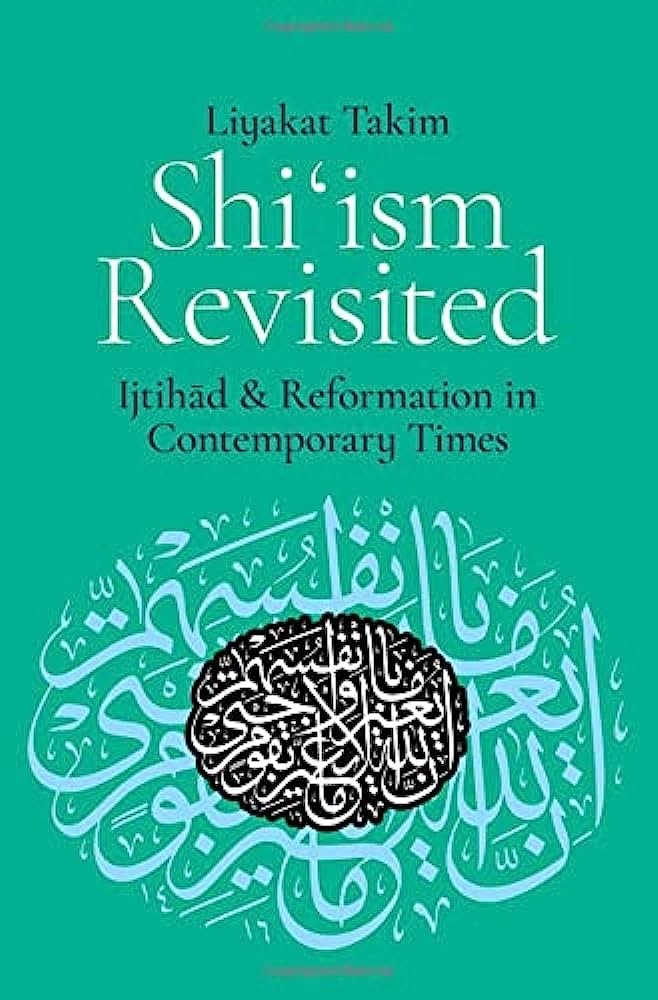
Shi'ism Revisited
Ijtihad and Reformation in Contemporary
Author(s): Liakat Takim
Reviewed by: Sajjad Rizvi
Review
Reviewed by: Sajjad Rizvi, University of Exeter, UK
Published by: Oxford University Press, New York, 2022, x+259pp. ISBN: 9780197606575.
One of the critical features of the contemporary study of Islam relates to our fundamental categories and how we define them and understand their narratives. This is as true of Islam as any element of it – in this case Shi[ism, understood here as the modern Twelver Shi[i normative tradition as it emerges from the modern seminary context of the hawzah in the shrine cities of Najaf and Qum. For over a hundred years, there has been an important reformist tendency – the likely of Shar[at-Sanglaji (and more radically Kasravi) in Iran and Khalisi in Iraq (and in a more limited sense al-Amin in Najaf and Lebanon) – that has focused on the reform of rituals, practices, and even fundamental theological positions such as the understanding of imamology, again most radically in the Pahlavi period with Haydar [Ali Qalamdaran and Sayyid Abu’l-Qasim Burqi'i in Qum, various figures in Punjab such as Muhammad Husayn Najafi known as Dhakku, and Ahmad al-Katib more recently in arabophone contexts. Alongside this more explicitly theological tendency to reform, one finds a hermeneutical approach that brings together the ‘religious intellectuals’ (ruwshanfikran-i dini) of post-revolutionary Iran such as Soroush, Mojtahed-Shabestari, Kadivar, Malekian alongside other practitioners of the ‘new theology’ – in fact, Constance Arminjon explicitly analyses this new wave as cutting across the Sunni-Shi[i and Arabic-Persian divide as a major feature of contemporary Islamic thought in her new book.