Islamic Thought and Sources
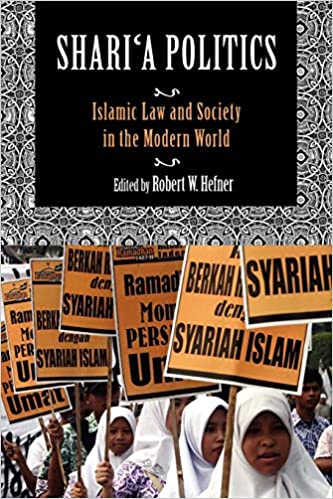
Shari’a Politics
Islamic Law and Society in the Modern World
Author(s): Robert W. Hefner
Reviewed by: Faizal Ahmad Manjoo
Review
This academic work is another research which adopts an Orientalist’s approach. It has an important subtle underpinning focus: how the Muslim world is evolving politically in an opposite direction to secularism while wanting to embrace some principles of liberal democracy; how to carve an integration process in the future and how to monitor this evolution from a western perspective. The way Islamic law is being interpreted in the modern world makes that it is no longer the monopoly of the Ulema. According to the editor, many social dynamics have changed in the Muslim world and there is now a move to dismantle the monopoly of interpreting the Shari[ah and politics is being used to achieve this end. Thus the term Shari[ah politics is being used. Three main groups have been identified regarding their approaches to the Western concept of democracy: those who negate western law and politics such as Sayyid Qutb; the neo-modernists such as Muhammad [Abduh who was prepared to accommodate western political concepts; and the secularists such as Al-Naim who is more inclined towards radical reform of Islamic law as interpreted by classical schools. The colonial and post-colonial eras seem to have played a seminal role in moulding this new interest in politics by Muslims who want change and wish to use politics to bring it about.