Contemporary Muslim World
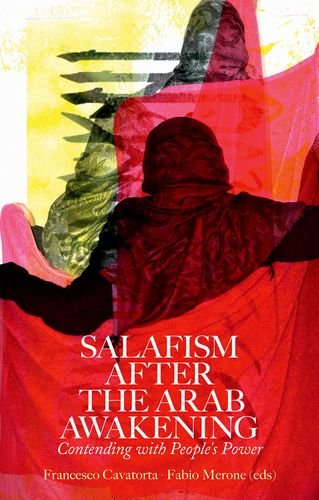
Salafism After the Arab Awakening
Contending with People's Power
Author(s): Fabio Merone & Francesco Cavatorta
Reviewed by: Christopher Anzalone
Review
Salafism, an influential subset of Sunni Islam, has attracted a great deal of attention from the news media, analysts, and scholars from a variety of disciplines and fields since the September 11, 2001 terrorist attacks by AlQaeda and again since the rise to prominence of the self-proclaimed Islamic State in 2014. Much of the coverage that has resulted from this newfound interest and attention has been negative, casting Salafism in a monolithic and negative light with a particularly heavy emphasis on the Salafi creed’s puritanical tendencies toward other forms of Islamic belief and practice. The advent of the ‘Arab Spring’ mass demonstrations and uprisings in parts of the Arab world beginning in late 2010 saw the rise to political power and influence of a number of Salafi Islamist parties, such as Egypt’s al-Nur party, and non-state armed groups, most prominent among them Syrian Salafi rebel groups including Ahrar al-Sham, Hay’at Tahrir al-Sham, and Jaysh alIslam. The edited volume under review, which includes twelve chapters by leading scholars on Salafism and political Islam, highlights the multiplicity of roles played by different Salafi groups, political parties, non-state armed groups, and social movements since the start of the ‘Arab Spring.’ With a focus on the Arab world and Arab Salafism, the book includes studies of Egypt, Lebanon, Jordan, Saudi Arabia, Tunisia, Syria, Yemen, and Kuwait as well as on the role of gender, political, and social movement dynamics on Salafi mobilization.