Islam and the West
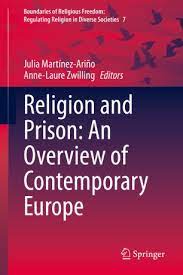
Religion and Prison
An Overview of Contemporary Europe
Author(s): Julia Martínez-Ariño & Anne-Laure Zwilling
Reviewed by: Ruqaiyah Hibell
Review
Twenty-three case studies of European states centred on the institutionalisation and practice of religion within national prison systems are collated within this edited text, which relay some significant and valuable contributions. A marriage between the legal and sociological aspects offers empirical data and cross-national/cultural comparative perspectives across European prison systems. Ambiguous and conflicting tension inosculated within contemporary expressions of secularity and deeply embedded Christianity continues to permeate European societies which emit a powerful Christian theological essence that strongly filters into prison policy and practice. Christianity is in instances co-opted as a Trojan horse to emit nationalistic/jingoistic sentiments obfuscated by religious values and ideals, as illustrated in the Czech Republic. Further incursions arise over the accommodation of major world religions and new-age faith beliefs within European penal institutions which, aside from referrals to a largely problematic perception of Islam, appear almost tangential to most of the discussions under review.
Legal perspectives explore the role and status of prison chaplaincy and regulatory oversight of religious practice and freedom, including dietary
provision, visits and prayer. While sociological evaluations consider religious conversion and discrimination, the role of Christianity in prison-church relationships receives the majority of attention, set amongst problematized facets, such as, proselytization – often surveyed through an oppressive securitised lens of radicalisation involving adherents to Islam. Billed as a rich and deep investigation, some of the material remains predictable and unadventurous. Contributions score more highly when they shed light on obscure European countries, whose prison systems rarely receive the observation or scrutiny needed to improve oversight of the men, women and young people incarcerated within these closed institutions. Russia, the largest post-communist state under discussion, whose sustained assault by communism on religion continues to reverberate, receives barely three pages of commentary due to a lack of research and unavailable information.