Philosophy and Comparative religion
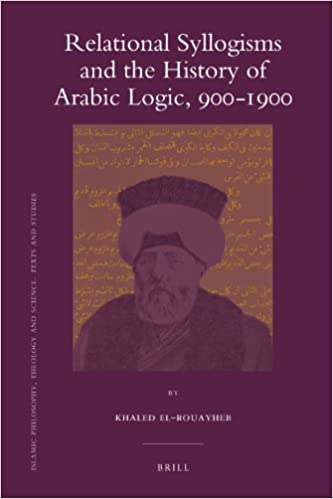
Relational Syllogism and the History of Arabic Logic, 900-1900
Author(s): Khaled El-Rouayheb
Reviewed by: Sajjad Rizvi
Review
There is an ancient debate over whether logic is an instrument of scientific inquiry and explanation, or whether it is an actual branch of philosophy, and each of the sides of the debate drew upon Aristotle to support their position. Even when both logic and the range of philosophical disciplines came into the world of Islam, this debate continued and found champions on each side. Whatever one’s position on the question, and its seems that the philosophers (the falasifah) favoured the study of logic as a integral aspect of linking together the mental world of ideas with the world of language and extra-mental reality (influenced as they were by the approach of Porphyry’s Isagoge), once theologians such as al-Ghazali had naturalised the study of logic as a key standard for training in fiqhi reasoning, logic (mantiq) remained a central feature of the curricula of the seminaries. Even today the traditional Shi[i seminaries in Iran and Iraq drawing upon the mixed curriculum of scriptural and rational disciplines (al-manqulat wa’l-ma[qulat) and the Sunni seminaries based on the dars-i nizami established in north India in the eighteenth century continue to teach mantiq. El-Rouayheb’s book, based upon his British Academy funded post-doctoral fellowship at Cambridge, therefore needs to be read within the intellectual history of the course of philosophy in Islam. While it is a specific study of relational inferences (the central feature of the Aristotelian syllogistic), it is also a contribution to the continuing vibrancy of intellectual inquiry beyond the medieval golden age and in fact perpetuates the new approach to the study of Islamic philosophy that argues for an actual golden age of thought that was located in the early modern period – and here the insistence is upon Ottoman and Mughal logicians exemplifying this. It is therefore also a challenge to the common notion of an intellectual decline, often associated with studies of Ottoman intellectual history. As a study of the history of logic in Islam, it builds upon and extends the earlier work of Nicholas Rescher (who famously argued that there is nothing to consider in post-fourteenth century logic, a point that El-Rouayheb disproves), and more recently, Tony Street, neither of whom really consider the post-classical or post-thirteenth century traditions. An important corollary of El-Rouayheb’s argument furthers Wisnovsky’s insight about the vibrant nature of commentary culture in Islam, the focus now of a Mellon project directed by Jon McGinnis and Asad Ahmed at St Louis.