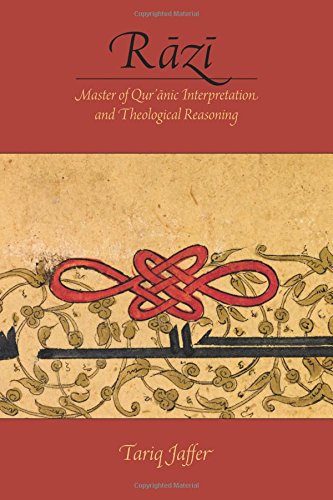
Islamic Thought and Sources
Razi
Master of Quranic Interpretation and Theological Reasoning
Author(s): Tariq Jaffer
Reviewed by: Muhammad al-Ghazali, Islamabad, Pakistan
Review
Fakhr al-Din Muhammad b.[Umar, better known as Imam Razi (543–606 AH/1148–1210) emerged on the intellectual horizon of the world of Islam when the centre of Muslim cultural gravity had already shifted to Central Asia. In the culturally rich and intellectually fertile land of Ray this great giant of Islamic scholarship acquired the disciplinary rigour of the tradition. Imam Razi’s scholarly personality matured at a time when Muslim Intellectual tradition had already expanded beyond its Arabian homeland. It generously welcomed contributions from a variety of intellectual resources, thanks to the expansion of Islamic land. Muslim scholars, philosophers and scientists eagerly exposed themselves to Persian, Mesopotamian, Egyptian, Bayzantine and Roman sources of knowledge and experience. As a result of this free exchange of ideas between Muslim culture and newly discovered spheres of knowledge, new issues and perspectives were introduced in the intellectual debates in the Muslim world. This variety of thought patterns and ideas greatly diversified the intellectual range of discussion among Muslim scholars who did not shy away from open debates and faced with courage and confidence the intellectual challenges that came in the wake of the socio-political expansion of the Muslim territory.