Islamic Thought and Sources
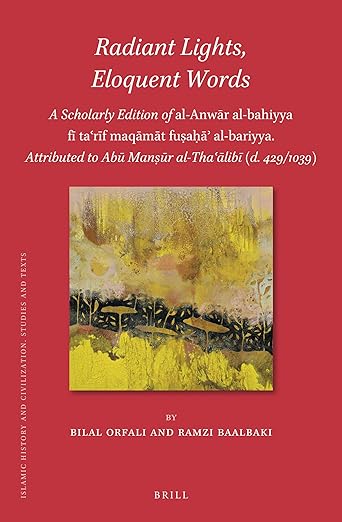
Radiant Lights, Eloquent Words
A Scholarly Edition of al-Anwār al-bahiyya fī taʿrīf maqāmāt fuṣaḥāʾ al-bariyya
Author(s): Bilal Orfali & Ramzi Baalbaki
Reviewed by: Muzaffar Iqbal
Review
Reviewed by: Muzaffar Iqbal, Center for Islamic Sciences, Canada
Published by: Leiden: Brill, 2022, xxxii+205 pp. ISBN: 978-9004516694; 978-9004517059 (e-book).
Edited by Bilal Orfali and Ramzi Baalbaki
- - - - - - - - - - - - - - - - - - - - - - - - - - - - - - - - - - - - - - - - - - - -
In this elegantly edited volume, Bilal Orfali and Ramzi Baalbaki offer scholars of Islamic literary heritage a critical edition and learned introduction to al- Anwār al-bahiyya fī taʿrīf maqāmāt fuṣaḥāʾ al-bariyya, a text attributed to Abū Manṣūr al-Thaʿālibī (d. 429/1039), the celebrated anthologist and littérateur of Nīshāpūr. Drawing upon two extant manuscripts (Beyazıt Umumi 3709 and Kuwait University 735), the editors reconstruct a unique work that combines epistemological reflection, literary exemplarity, and adab-based political counsel.
The structure of al-Anwār al-bahiyyah is both elegant and pedagogically deliberate. The first three chapters explore knowledge (ʿilm) in its meaning, merit, and conditions—an intellectual preamble that frames the fourth and final chapter, which comprises eloquent speeches delivered by sages and scholars in the presence of rulers. These maqāmāt, in the pre-Hamadhānian sense, span cultures and epochs, including Arab Jāhilī exempla, Greek and Byzantine dialogues, Persian maxims, Indian moral tales, and Islamic orations. This diachronic and cross-cultural breadth reflects al-Thaʿālibī’s encyclopedic vision and his commitment to preserving the highest expressions of adab in both content and form.