Contemporary Muslim World
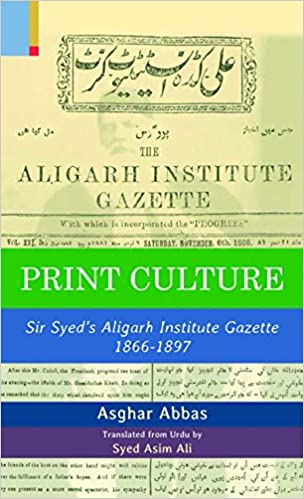
Print Culture
Author(s): Asghar Abbas
Reviewed by: Abdur Raheem Kidwai
Review
The work under review abounds in insights into the evolution of post-1857 Muslim thought, Muslim education, Muslim culture, and Urdu language and journalism. The rejuvenation of the Indian Muslims was set in motion by the towering personality of Syed Ahmad Khan (1817–1898), popularly referred to as Sir Syed. His contributions to both the Indian and Muslim public life are breathtakingly wide-ranging: promoting peaceful coexistence in the pluralistic Indian polity, launching comparative religion studies, infusing the spirit of critical thinking and free enquiry, introducing modern education among Indian Muslims in particular, initiating simple, easy to understand Urdu prose style and espousing journalism for the cause of social reform. The Aligarh Institute Gazette, his periodical, went a long way in disseminating new, inspiring ideas among the mid-nineteenth century intellectually, politically and culturally impoverished and enervated Indian Muslim community, reeling under the severe loss of around one thousand years long political power and glory. Take the following themes of some of his editorials in the Gazette as illustrative, which eventually salvaged his co-religionists: Forging cordial social relations with Hindus, Christians and adherents of other faiths (1867 and 1897)...