Islamic Thought and Sources
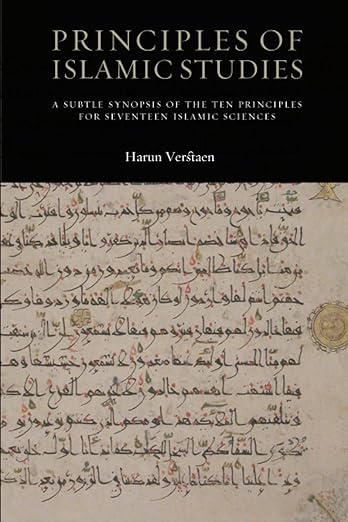
Principles of Islamic Studies
A Subtle Synopsis of the Ten Principles for Seventeen Islamic Sciences
Author(s): Harun Verstaen
Reviewed by: Zahed Fettah
Review
Reviewed by: Zahed Fettah – Markfield Institute of Higher Education, UK
Published by: Independently published, 2022, 133pp. ISBN: 979-8360629962.
When the Prophet (blessings and peace be upon him) was sent to guide mankind, he was sent with a revealed message: the Qurʾān. He was then commanded to embody this Qurʾān and explain it to the people. In early Islam therefore, the only Islamic knowledge that was really taught was the Qurʾān and the Prophetic Sunnah. This study would have included Arabic, legal theory, law, and so on, but only as a part of the wider study of these two primary sources. As the Muslim community expanded, people became more distant from the life of the Prophet, and as the Arabic language came into contact with other languages, new needs emerged to study specific areas of knowledge independently. Although one does see a hint of this in the first generation of Muslims, it was still rare. ʿAlī ibn al-Ḥusayn (d. 93 H), the grandson of ʿAlī ibn Abī Ṭālib, better known as Zayn al-ʿĀbidīn, says, for example: