Contemporary Muslim World
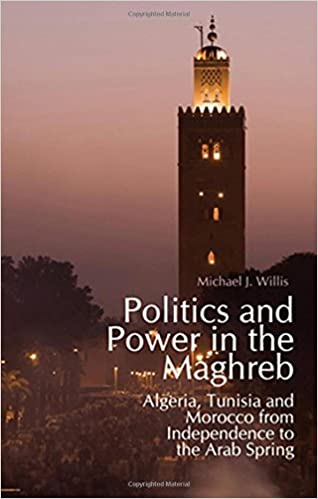
Politics and Power in the Maghreb
Algeria, Tunisia and Morocco from Independence to the Arab Spring
Author(s): Michael J. Willis
Reviewed by: Murad Wilfried Hofmann, Bonn, Germany
Review
This is a work of love, written by an aficionado of the Maghreb. Now teaching at St. Antony’s College in Oxford, the author has, for more than two decades, specialized in Maghrebinian studies, in particular Morocco since independence. Having taught for seven years at al-Akhawayn University in Ifrane, a small city in the Middle Atlas region south of Fes, he has indeed well-earned his King Mohammed VI Fellowship in Moroccan and Mediterranean Studies. The three countries concerned, Morocco, Algeria, and Tunisia share a Berberized version of Arabic, Maliki Islam, and a history of French colonization. They differ from each other, however, in most other respects, although they owe their national identity to colonialism, which lasted 44 years in conservative Morocco, 75 years in reformist Tunisia and, with profound impact, 132 traumatic ones in radicalist Algeria. Morocco profited from Marshall Lyautey’s policy of minimal interference during his governorship (1912-1925). Many Moroccans and Tunisians even enjoyed the privilege of studying in France. In stark contrast, migrant Algerians mainly had served as manual labourers and were exposed, in France, to antireligious socialism. In all three cases, violent internal competition in shaping the post-colonialist state caused lasting authoritarian regimes.