Contemporary Muslim World
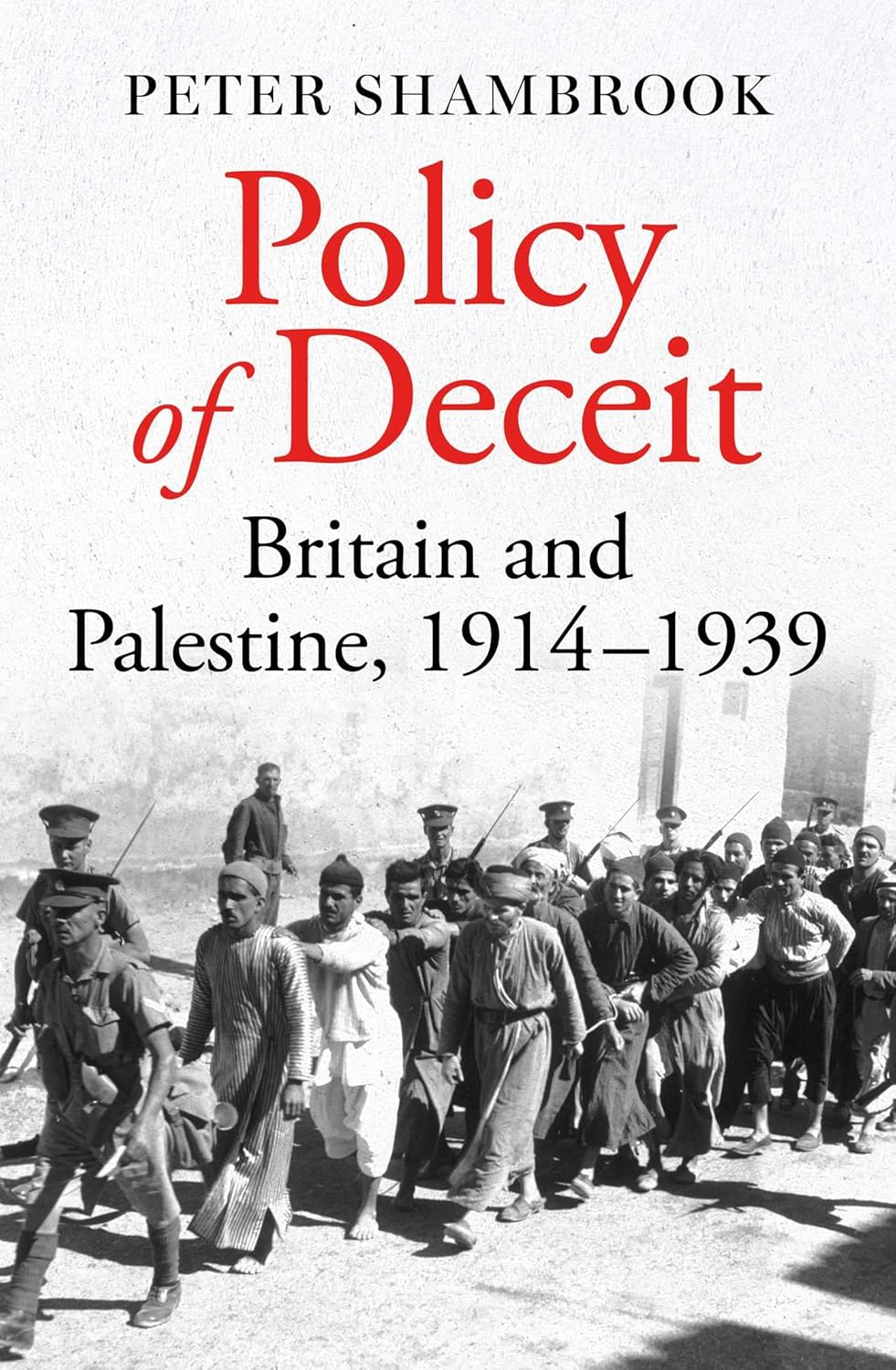
Policy of Deceit
Britain and Palestine, 1914-1939
Author(s): Peter Shambrook
Reviewed by: Geoffrey Nash
Review
Reviewed by: Geoffrey Nash, Durham, UK
Published by: London: Oneworld, 2023, 416pp. ISBN: 978-0861546329.
- - - - - - - - - - - - - - - - - - - - - - - - - - - - - - - - - - - - - - - - - - - -
Rarely does an historical monograph come with so many positive endorsements on its cover, all from major authorities in the field, in this case the modern history of colonial Palestine. A little knowledge of the background to the topic it investigates is as follows. In 1914, the starting point of Peter Shambrook’s book, a severing occurred between two long-term political allies, Great Britain and Ottoman Turkey. By opting to join the Axis powers in the European war Turkey caused the British to replace their policy of upholding the Ottoman Empire which had stood for most of the previous century. In the Middle East, Britain cast a look over the Arab rulers and entered into an alliance with Sharif Hussein ibn Ali of Makkah with a view to his raising a force against the Turks and clearing them out of the Hijaz. Shambrook’s title, Policy of Deceit, adverts to what he considers a serious infringement of Britain’s agreement with the Sharif: a reneging on its promise to reward his revolt by carving out for him an Arabian kingdom that would consist of a share of Arab lands then under Ottoman suzerainty. At the close of the war Britain would maintain that Palestine had been excluded from the original offer, made in an exchange of letters from July 1915 to March 1916 between the British High Commissioner in Egypt, Sir Henry McMahon and Sharif Hussein.