Literature
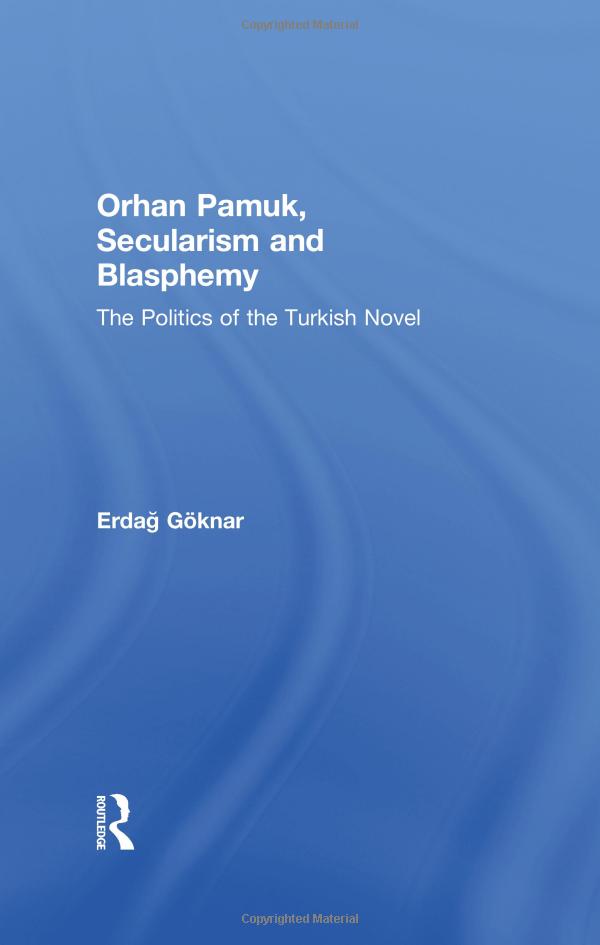
Orhan Pamuk, Secularism and Blasphemy
The Politics of the Turkish Novel
Author(s): Erdağ Göknar
Reviewed by: Abdullah Drury
Review
Erdağ Göknar cogently forays into modern literature by Orhan Pamuk, analysing and critiquing his evolving theoretical assumptions and methodologies, and suggesting literary strategies to advance beyond the prevalent aperies generated and restricted by contemporary social conventions and outright legal restraints. Orhan Pamuk, Secularism and Blasphemy; The Politics of the Turkish Novel is a truly compelling book that engages the reader deeply with the increasingly important subject of Turkish literature. Heavily grounded in modern literary theory, Dr. Göknar does a brilliant job in laying out his arguments, namely that Pamuk can be read as a means to access the concealed cultural, historical and literary contexts of contemporary Turkey. The prose is startlingly well organised, almost Byzantine in its broad scope, complex structure, depth of intelligence and irrefutable visual beauty. At its core, this engaging work is a radical critique not only of the various prominent features of recent Turkish writings such as intertextual allusions, secular materialism, and both meta-fiction and meta-history, but also an examination of how Pamuk and other modern Turks have approached literature in general, contingent literary form, teleological technique, allegorical content, multi-perspective styles, and chronotopes and metonyms. In some respects it is nothing less than a systematic deconstruction of the literary approaches of both ‘Turkish cultural logic’ (p. 6) and the official myths of republican Turkey over the past few decades.