Islamic Thought and Sources
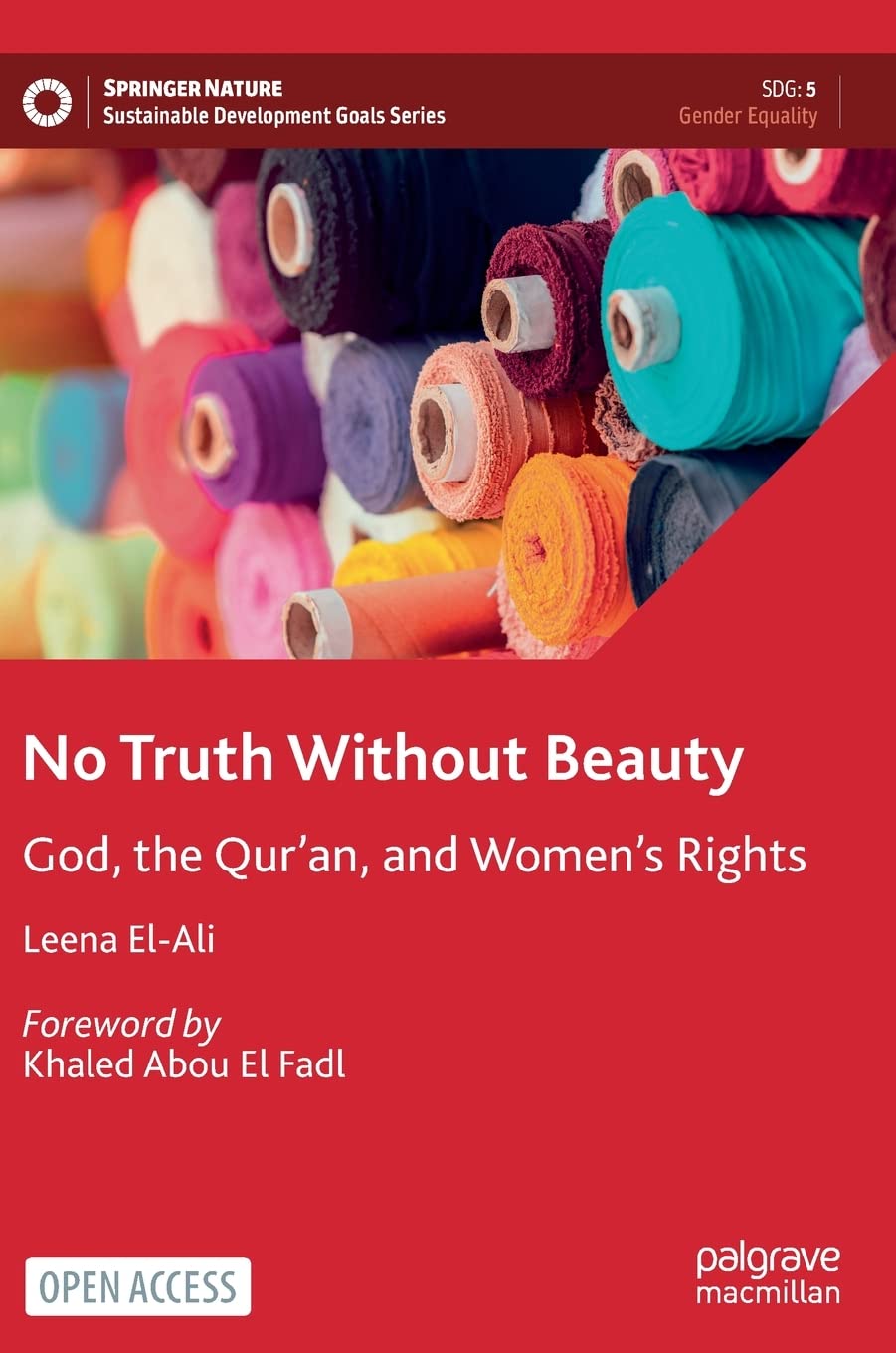
No Truth Without Beauty
God, the Quran and Women’s Rights
Author(s): Leena El-Ali
Reviewed by: Abdur Raheem Kidwai
Review
Reviewed by: Abdur Raheem Kidwai, Aligarh Muslim University, India
Published by: London: Palgrave Macmillan, 2022 (Open Access Edition), 306pp. ISBN:978-3030835828.
- - - - - - - - - - - - - - - - - - - - - - - - - - - - - - - - - - - - - - - - - - - -
Tarif Khalidi, the Sir Thomas Adams’s Professor, King’s College, Cambridge, and English translator of the Qurʾān records this observation on the basis of his extensive study of world religions: “The most startling aspect of its [the Qurʾānic] rhetoric is the deliberate address to women alongside men, rendering the Qurʾan among the most gender-conscious of all sacred texts” (Khalidi, Tarif, The Qurʾan: A New Translation. London, Penguin, 2008, p.xviii). Leena El- Ali’s work under review is a substantial, extensive elaboration on gender parity in the Qurʾān. Of the numerous misconceptions and misperceptions about Islam down the ages, the most irksome and factually incorrect one is that it is a male-centric religion that oppresses womankind. El-Ali’s well documented study goes a long way in refuting this stereotype. Her objectives in writing this book are: (i) to argue that, with its relentless advocacy for women’s rights, the Qurʾān represents an affirmative action targeting gender equality; (ii) to bring into sharper light the egalitarian message of hundreds of Qurʾānic verses which affirm women’s rights; (iii) to identify some taint of patriarchy in some of the classical interpretations of the Qurʾān owing to certain socio-economic and cultural baggage. In pursuance of these goals, she has undertaken an incisive and vigorous study of the Qurʾān.