Islam and the West
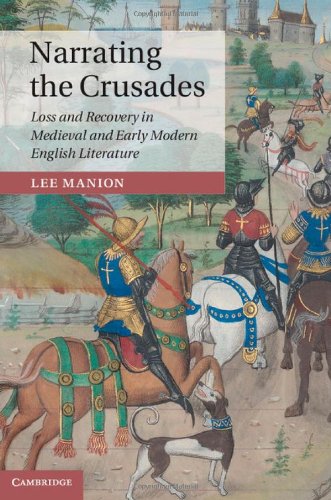
Narrating the Crusades
Loss and Recovery in Medieval and Early Modern English Literature
Author(s): Lee Manion
Reviewed by: Masoodul Hasan, Aligarh Muslim University, India
Review
In the wake of the volatile political situation in North West Asia during the past few decades, the Crusades have repeatedly engaged the historians and scholars productively. History is resifted, and the related creative writings are viewed afresh. In the Middle Ages these Holy Wars inspired poets and chroniclers on partisan lines who produced a rich crop of literature in English and other European languages. Critical study and analysis of these metrical romances is an important feature of modern English scholarship as well. Lee Manion’s recent book under review clearly manifests this trend and bears genuine academic worth. It discusses the themes, structures and peculiarities of four later Middle English romances, suggesting their likely origins, influences and parallelisms with certain other texts. The study focuses especially on the following romances: Richard Coeur de Lion, Sir Isumbras, Octavian and the Sowdan of Babylon. Apart from the theme of Holy War, these romances have some common distinctive features which persuade Manion to club them together as ‘crusading romances’. They have dispersed scenes of actions in Europe and North Africa and are not confined to the Holy Land. They are all post-Crusade III compositions, stirred by the shock of Acre’s loss to Muslims, and the fresh urge to retrieve it, which, in the words of Manion, endues them with a common ‘narrative pattern of loss and recovery.’ While the feeling of loss across the intervening two centuries may be admissible, no specific references to it seem to have been included in the argument. Besides, the motifs of loss and recovery – of cause, honour, liberty or territory – are not peculiar to these particular romances; the same themes are quintessentially common to all chivalric tales and epics. For instance, the Arthurian romances, and Spenser’s Fairie Queen exemplify this feature without any reference to the historical Holy Wars.