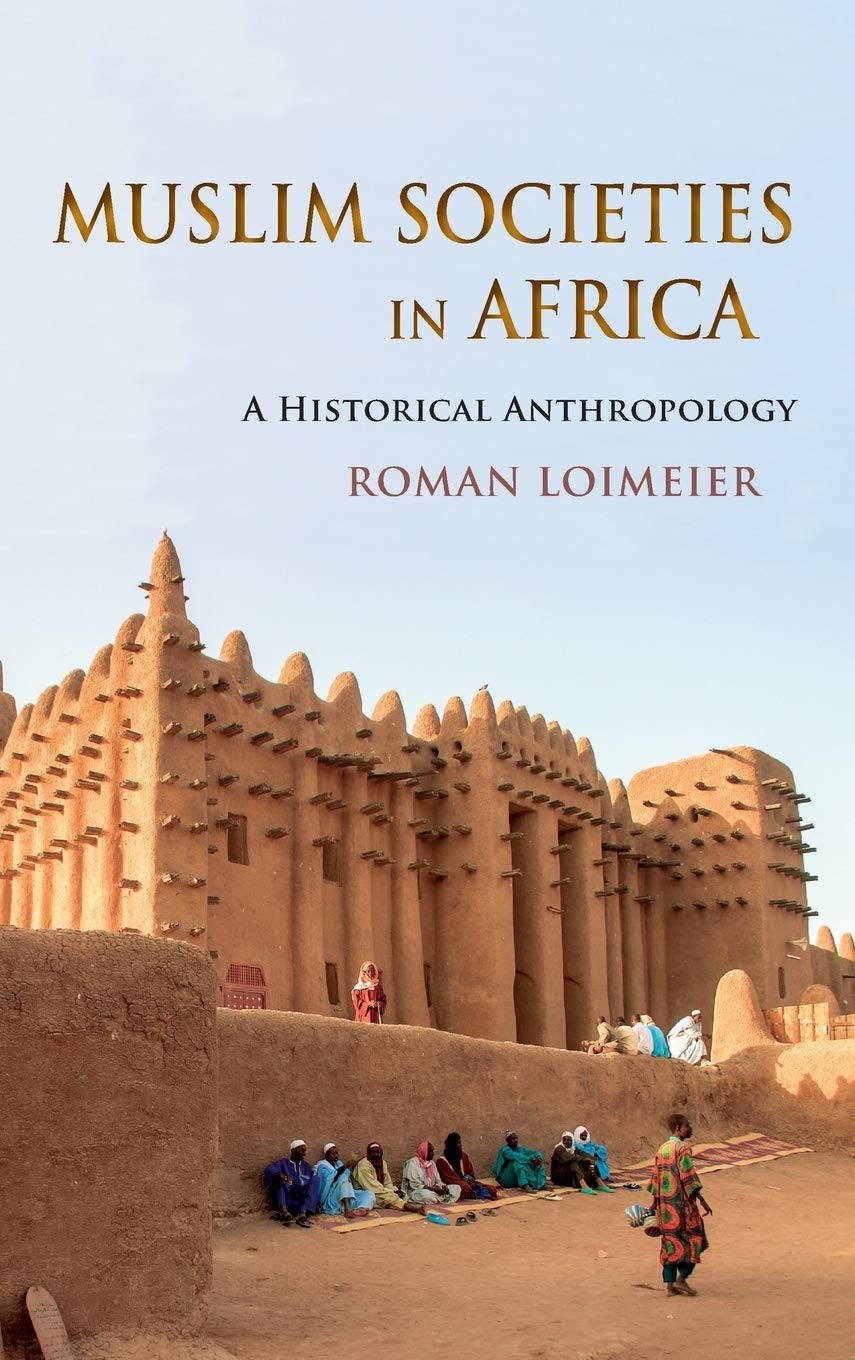
Contemporary Muslim World
Muslim Societies in Africa
A Historical Anthropology
Author(s): Roman Loimeier
Reviewed by: Abdal Karim Kocsenda, UAE
Review
Rarely does one pick up a book these days that reads like the finest of Ibn Battutah’s and Ibn Khaldun’s thoughts crossed with contemporary scholarship and a blazing passion for the subject that carries the reader in its wake like Roman Loimeier’s work on Muslim societies in Africa. This is all the more exciting since the area is often overlooked in courses on Islam and history. Moreover, unlike most academic treatments where scholarship gets in the way of readership and clarity, Loimeier’s work is a pleasure to read from start to finish. This is important because the book spans the length and breadth of Islam in Africa: from the earliest conversions in East Africa prior to the Hijrah, to the North and West African conquests and empires of pre-modern times. The author begins with a fantastic introduction debunking the myth of an “African Islam” that is more tolerant, syncretic, and friendly than “Militant Arab Islam.” This, he shows, was a post-colonial construct aimed at fostering certain relations and curbing others in the colonized lands. Rather, like an astute historian would, Loimeier shows exactly how the meeting between Islam and the different African peoples played out in historical (and anthropological) time resulting in beautiful local manifestations of Islam, rather than many different “Islams” (which, he demonstrates, is the function of sects, not religion as such). Meanwhile, he tackles the profound topic of conversion and its various means and motives which makes it required reading for any serious student of Islamic history.