Islamic Thought and Sources
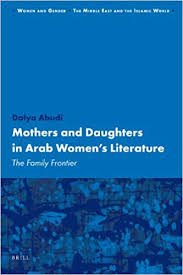
Mother and Daughters in Arab Women’s Literature
The Family Frontier
Author(s): Dalia Abudi
Reviewed by: Cleo Cantone
Review
With its compelling subject and detailed accounts of Arab women’s short stories and novels, this book would have made a fascinating anthology. Lucidly written, the retelling of Arab women’s life stories and inter-familial relationships draws in the reader to the extent that one is carried away from the central theme of the book and sucked into often moving and controversial narratives. Indeed, if the premise of the book to ‘un-mystify’ mother-daughter relationships in Arab women’s literature, Abudi’s explora- tion does full justice to the topic. Even though her aim is to examine the mother-daughter relationship from a variety of perspectives ranging from psychological, cultural, religious and feminist, it is primarily the latter that shapes the interpretations of the texts, themselves carefully selected to sup- port that viewpoint. The intimate portrait of the mother-daughter dynamic is undoubtedly informed, as she mentions in the Acknowledgements, by her own relationship with her daughter, mother and grand-daughter, manifest in the sympathy for the figure of the misunderstood daughter.
In common with much of the literature on women in the Middle East, the emphasis is on Arabs as an ‘ethno-cultural group’ and the term Arab is clearly defined in the Introduction as comprising the culture, socio-political experience, economic interests and collective memory of those who speak the Arabic tongue. Yet the dominant religion of Arabs, Islam, is viewed as a conservative, often oppressive, force that orientates women towards set roles as mothers and wives (p. 50); at the same time, further on the author reflects on Islam’s role as a source of cultural values that reinforces the importance of family in Arab society.