Islamic Thought and Sources
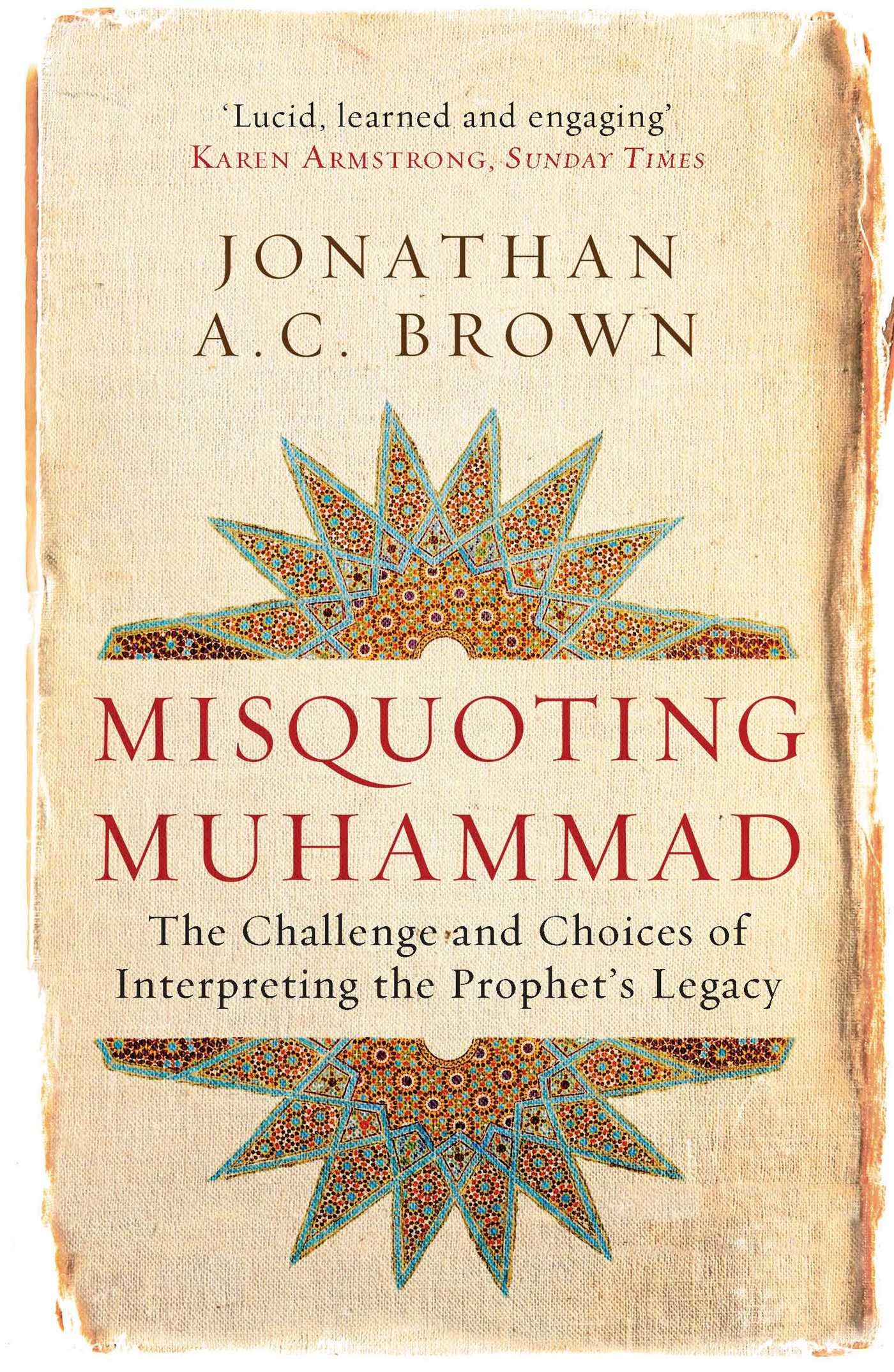
Misquoting Muhammad
The Challenge and Choices of Interpreting the Prophets Legacy
Author(s): Jonathan A. C. Brown
Reviewed by: Abdur Raheem Kidwai
Review
This thought provoking book has grown out of the author’s research interest in the field of ‘forgery in the Islamic tradition’ (p. xv). Its chapter 6, “Lying about the Prophet of God” (pp. 216–266) details and scrutinizes the use of some unreliable hadith in Sunni Islam. For Brown, certain contentious issues, which are drummed up in the West for defaming Islam and casting Muslims as barbaric and uncouth people have their origin in these weak, indefensible hadith. As to controversial issues, they are: marriage with very young girls, the marginalisation of women in public life, the punishment for apostasy, speaking of riba as more outrageous than committing incest, promising seventy-two virgins to each and every martyr, not putting a parent to death for killing his/her child and domestic violence. Notwithstanding Brown’s discussions on the above seemingly problematic issues in Islamic law, he does not appear spewing venom against Islam and its primary sources. Nor does he attempt, like Orientalists, to paint Islam in dark colours, as a religion devoid of reason or commonsense, which has no place in today’s world. Rather, in keeping with the telling title of the book, he analyses threadbare some hadith reports which appear to him as discordant with the overall scheme of things Islamic. And he concludes that many misperceptions about Islam have arisen as a result of such inauthentic hadith which, in certain instances, seek to maintain morally and logically untenable positions. For example, while examining the hadith report that a father is not to be killed as punishment for [killing] his non-infant child,